Reality check: what the mid-2026 data actually says about AI search, Google and the future of website traffic
AI search is growing. Google is still dominant. The immediate disruption is Google answering more questions without sending the click. |
Spend five minutes on LinkedIn and you’d think Google had already been marched behind the shed and put out of its misery.
Search is dead.
SEO is dead.
Websites are dead.
ChatGPT has won.
Apparently, the eight billion people on Earth received the memo simultaneously and now ask Perplexity where the nearest petrol station is.
There is just one irritating problem.
The data doesn’t agree.
AI search is growing. Quickly.
It is changing how people find information, compare products and make decisions. It is the first genuine challenge to Google’s search model in years. But it is better understood as another layer in the marketing and discovery ecosystem, not a completed replacement of everything that came before it.
As of mid-2026, Google remains overwhelmingly dominant.
The bigger and more immediate threat to website traffic is not millions of people abandoning Google for ChatGPT. It is Google giving people fewer reasons to leave Google.
That distinction matters. Because marketers are once again confusing a real shift with a completed revolution.
They are not the same thing.
The AI takeover is mostly PowerPoint
Marketing loves a death narrative.
Television is dead. Radio is dead. Email is dead. Facebook is dead.
SEO has died so many times it should have its own Netflix true-crime documentary.
Now it is Google’s turn.
The usual evidence goes something like this:
- AI traffic grew by 500%.
- ChatGPT reached hundreds of millions of users.
- Young people are changing how they search.
- A bloke on a podcast said his children never use Google.
- Therefore, Google is finished.
Lovely.
Except percentages without scale are one of marketing’s favourite little magic tricks.
Traffic can grow by 500% and still be tiny. A company can double its revenue by going from one customer to two. Technically impressive. Probably not time to hire a CFO.
The interesting question is not whether AI search is growing. It clearly is.
The better question is: How large is it compared with the systems it is supposedly replacing?
That is where the story becomes considerably less dramatic.
Google is still operating on another planet
In May 2026, Similarweb estimated that Google.com received approximately 87.5 billion visits.
ChatGPT.com received approximately 5.6 billion.
To be clear, 5.6 billion monthly visits is enormous. ChatGPT is not some niche product being used by seven developers in a basement. It was the fifth-most-visited website in the world in Similarweb’s May ranking.
But Google’s traffic was still more than 15 times larger.
Gemini received another 2.9 billion visits, although that also makes the ‘AI versus Google’ story slightly awkward because Gemini is owned by Google. The supposed invader is partly living inside the castle.
Traditional search-market data tells a similar story.
Statcounter reported Google with 91.27% of the worldwide search-engine market in June 2026. Bing held 4.68%. Every other traditional search engine was fighting over the crumbs left under the table.
Now, these figures need context.
Website visits are not the same as search queries. A visit to ChatGPT might involve writing an email, analysing a spreadsheet, generating code or asking whether a rash looks suspicious. It is not automatically a Google-style search.
Likewise, traditional search-engine market-share figures do not capture every search made on Amazon, YouTube, TikTok, Reddit or AI platforms.
But even when researchers widen the definition of search, Google still dominates.
A SparkToro and Datos analysis of desktop search activity across 41 major websites found that Google accounted for 73.7% of searches in the United States during the fourth quarter of 2025. Traditional search engines collectively represented around 80%, commerce sites about 10%, social platforms 5.5%, and AI tools 3.2%. Amazon, Bing and YouTube each recorded more search activity than ChatGPT in that dataset.
Different methodology. Same broad conclusion.
AI has entered the race. Google is still several laps ahead.
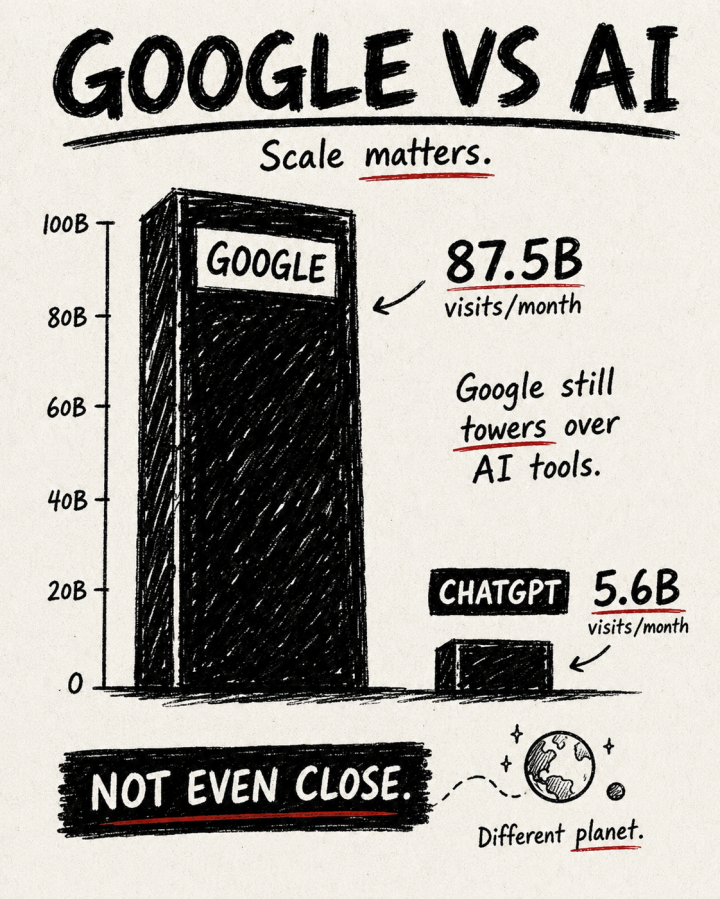
Figure 1. Google versus ChatGPT monthly website visits: scale matters.
Data source: Similarweb – Top 100 Most Visited Websites, May 2026
Platform usage is not website traffic
This is where a lot of the conversation becomes muddled.
People see billions of visits to ChatGPT and assume billions of visits are being redirected from Google to business websites.
They aren’t.
Using an AI platform and receiving traffic from an AI platform are completely different things.
You can:
- ask ChatGPT a question;
- receive an answer;
- see three brands mentioned;
- never click a source;
- never visit a website;
- and still feel that your research is finished.
That may influence a purchase. It may create awareness. It may shape which brands enter the consideration set. But it does not appear in analytics as referral traffic.
SE Ranking analysed traffic from major AI search platforms and found that AI referrals represented approximately 0.32% of total website traffic in 2026.
Organic search represented 42.75%.
In that dataset, organic search was still sending roughly 134 times more website traffic than AI platforms.
Not 134% more. One hundred and thirty-four times more.
That is not a minor gap. That is the difference between a backyard swimming pool and the Pacific Ocean.
This does not mean AI visibility is worthless. It means we should stop pretending AI referrals currently operate at anything close to the scale of organic search.
They don’t.
The 0.32% figure is tiny – and important
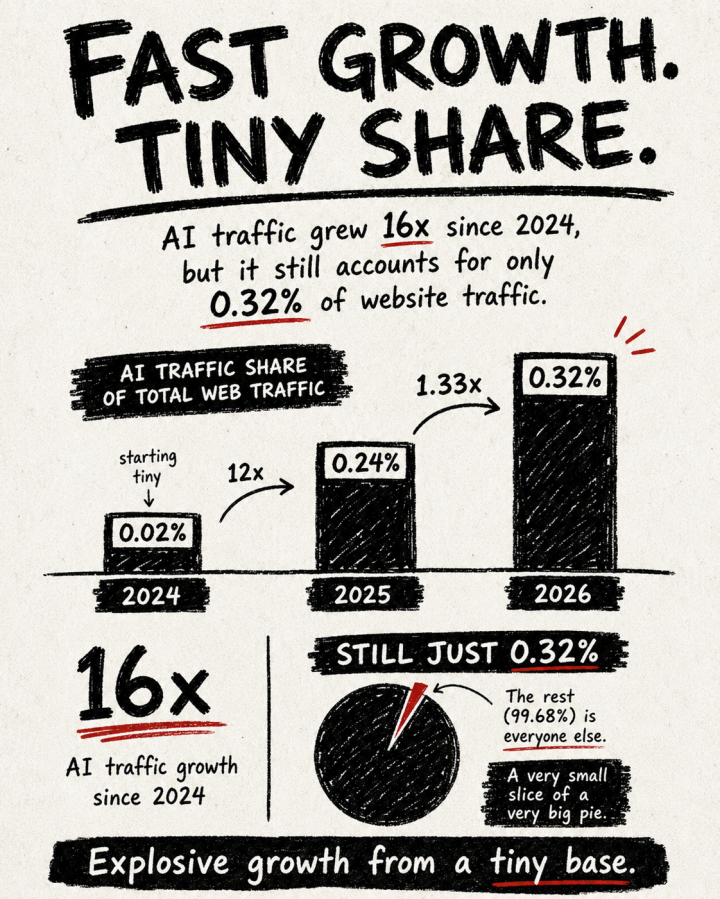
Figure 2. AI referral traffic is growing rapidly, but from a very small base.
Data source: SE Ranking – AI referral traffic study, June 2026
There are two equally stupid ways to respond to that number.
The first is to say: ‘AI traffic is only 0.32%. Ignore it.’
The second is: ‘AI traffic grew 16 times. Stop investing in everything else immediately.’
Both miss the point.
SE Ranking found that AI referral traffic increased from approximately 0.02% of website traffic in 2024 to 0.32% in 2026.
That is a sixteenfold increase in less than two years.
The growth rate tells us the direction. The market share tells us the current scale.
You need both.
A toddler might grow 20% in a year. Impressive. You still would not put him in the Wallabies front row.
AI referral traffic is small, but it is no longer invisible.
More importantly, AI’s influence is probably larger than its referral numbers suggest.
When an AI system mentions a brand but the user later searches for that brand directly, the AI platform gets no credit. When someone reads an AI comparison, talks to their partner and purchases three days later, attribution becomes murky. When ChatGPT tells a user that three holiday parks are worth considering, all three brands may benefit even if nobody clicks the citations.
So we need to separate two ideas:
- AI traffic is currently small.
- AI influence may be considerably larger.
That is a reasonable inference.
What is not reasonable is pretending we can accurately measure every part of that influence yet.
We cannot.
AI visitors may be small in number but stronger in intent
There is another reason not to dismiss AI referrals.
The visitors who do click may be more valuable.
The SE Ranking study reported that, across its dataset, visitors referred by AI platforms spent an average of 68% more time on websites than organic-search visitors. It described AI systems as a form of intent filter: users can ask questions, narrow options and clarify their requirements before visiting a site.
That makes sense.
A traditional Google visitor might search: family holiday parks NSW
They are at the beginning of the process.
An AI user might spend ten minutes explaining:
- they have two children;
- they want somewhere within three hours of Sydney;
- they need a pool;
- they do not want to camp;
- they are travelling during school holidays;
- and one child apparently considers Wi-Fi a basic human right.
By the time they click, they may be much closer to a decision.
But this is not universal.
Traffic quality will vary by industry, query, product and platform. A B2B software company may receive highly qualified AI referrals. A news publisher may receive almost none because the answer has already consumed the article and burped out a summary.
The only sensible response is to measure your own data.
Industry averages are useful. Your revenue is more useful.
The biggest threat to Google traffic is Google
Here is the real shift.
The question is not simply whether people are moving from Google to ChatGPT.
The bigger issue is that Google itself is becoming more like ChatGPT.
Google no longer wants to be merely the place where you find an answer. It wants to be the place where you receive the answer.
That difference is brutal for publishers and websites.
The old search journey looked roughly like this:
|
Question -> Google results -> website -> answer |
The emerging journey looks more like this:
|
Question -> generated answer -> maybe a website |
That ‘maybe’ is doing a lot of work.
Google has been moving in this direction for years through featured snippets, knowledge panels, weather results, calculators, maps, local packs, shopping modules, sports scores, flight information, video carousels and instant answers.
AI Overviews and AI Mode simply take the model further.
Instead of displaying ten links and asking the user to assemble the answer, Google can now assemble it for them.
Helpful for the user. Less charming for the websites that produced the information.
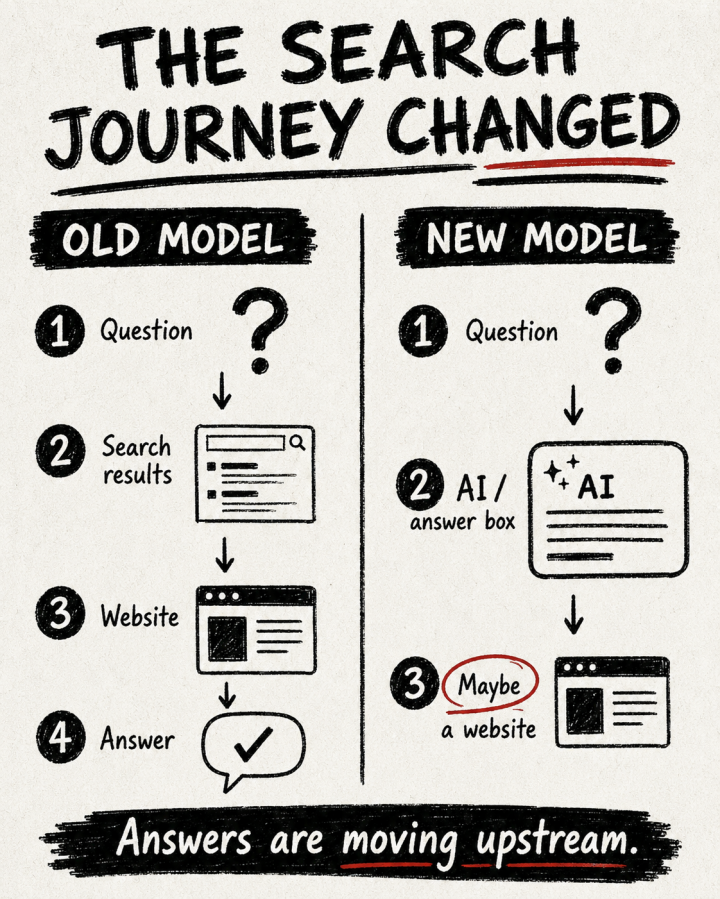
Figure 3. The search journey is shifting from website-first to answer-first.
Most Google searches now end without a click
In the first four months of 2026, SparkToro reported that 68.01% of US Google searches ended without a click.
Not without a click to an organic result. Without a click anywhere.
The user either finished the search session or reformulated the query without visiting another page.
For comparison, SparkToro’s earlier 2024 study put US zero-click searches at roughly 58.5%. The exact methodologies and periods differ, so this is not a neat laboratory experiment, but the direction is difficult to miss: Google is resolving more searches inside its own environment.
This is the part many ‘ChatGPT killed my traffic’ stories miss.
Your organic traffic can decline even when Google’s usage remains strong.
You can maintain the same rankings. Your impressions can rise. Your brand might even appear inside an AI Overview. And your clicks can still fall.
Because ranking first is not especially useful when Google places a complete answer, a video, a map, four products and a small digital marching band above you.
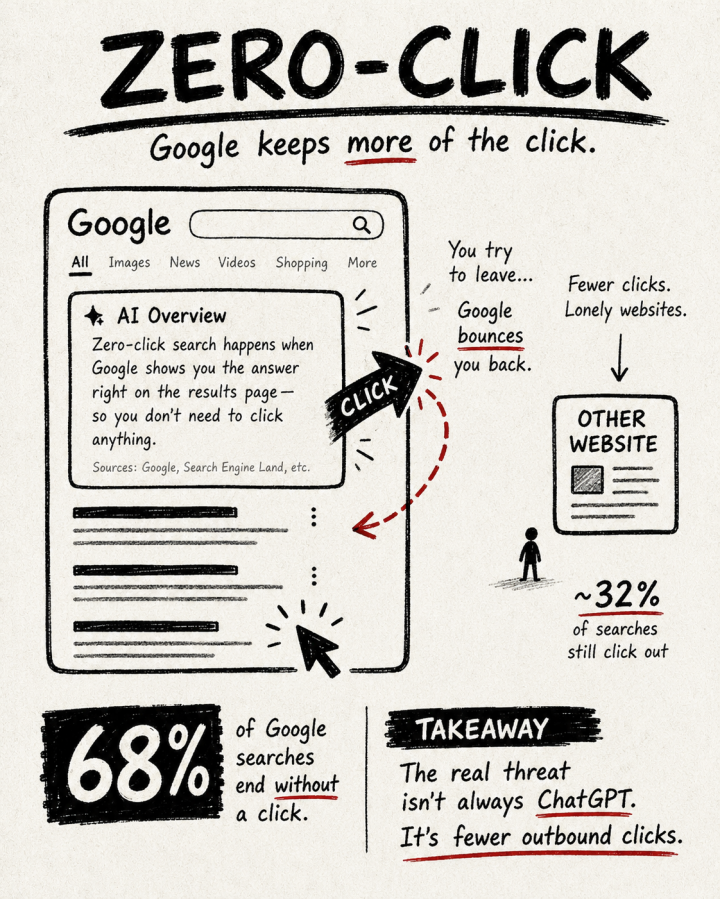
Figure 5. Google can reduce website traffic without losing the search.
Data source: SparkToro – 2026 zero-click research using Similarweb data
AI Overviews are changing the value of a ranking
Ahrefs compared click-through rates for searches that triggered AI Overviews with similar informational searches.
Its December 2025 analysis estimated that the presence of an AI Overview reduced the click-through rate of the top organic result by approximately 58%.
The effect was smaller for lower positions but remained negative across the first page.
That does not mean every site will lose 58% of its traffic. It does not mean AI Overviews are the only cause of lower clicks. And it does not prove that all queries behave the same way.
But it shows how the economics of ranking are changing.
Historically, marketers treated a high Google position as the prize.
Now there may be three separate prizes:
- Being ranked prominently.
- Being used as a source in the generated answer.
- Receiving the click after the answer appears.
You can win the first two and still lose the third.
That is uncomfortable because digital marketing has spent 25 years measuring clicks.
A citation without a visit is harder to value. A brand mention without clean attribution is harder to explain in a board report.
‘Trust me, the robot probably influenced them’ is not yet a metric most finance teams enjoy.
Search is not disappearing. It is spreading everywhere
Part of the confusion comes from continuing to treat search as one box on one website.
People search on:
- Google;
- YouTube;
- Amazon;
- TikTok;
- Reddit;
- Instagram;
- maps;
- app stores;
- marketplaces;
- ChatGPT;
- Gemini;
- Perplexity;
- and any platform with a text field and enough confidence.
The customer does not care whether marketers classify this as SEO, social search, marketplace optimisation, AEO, GEO or interpretive dance.
They have a problem. They use whatever tool feels easiest.
They may begin with ChatGPT, verify the answer on Google, watch a YouTube review, read a Reddit thread, visit a website and then ask their mate Dave.
Dave has no qualifications but speaks with tremendous confidence, so naturally he gets the final vote.
The future is not: Google or AI.
It is: Google and AI and social and video and marketplaces and whatever else the customer feels like using.
That creates a fragmented journey, but fragmentation is not new. AI is simply adding another layer.
We are now operating in two search worlds
For marketers, the simplest model is to think about two overlapping worlds.
World one: traditional search
Google remains the dominant gateway for discovery and website traffic.
It is particularly strong for:
- navigational searches;
- local businesses;
- shopping;
- travel;
- urgent needs;
- product research;
- service comparisons;
- and high-volume commercial demand.
People still search for plumbers. They still search for hotels. They still search for ‘best television under $1,000’ and then ignore every recommendation because the slightly more expensive one has prettier lighting in the shop.
Traditional search remains deeply embedded in browsers, phones, maps, advertising systems and everyday habits. Replacing that behaviour is not as simple as launching a better chatbot.
World two: AI-assisted discovery
AI tools are becoming useful for:
- complex questions;
- initial research;
- summarising information;
- comparing options;
- planning;
- recommendations;
- troubleshooting;
- and multi-step decision-making.
Instead of shortening a query into a handful of keywords, users can explain the entire situation. They can ask follow-up questions. They can challenge the answer. They can refine what they want without restarting the process.
That is a meaningful change.
The mistake is assuming world two has already swallowed world one.
It hasn’t. They are currently operating together.
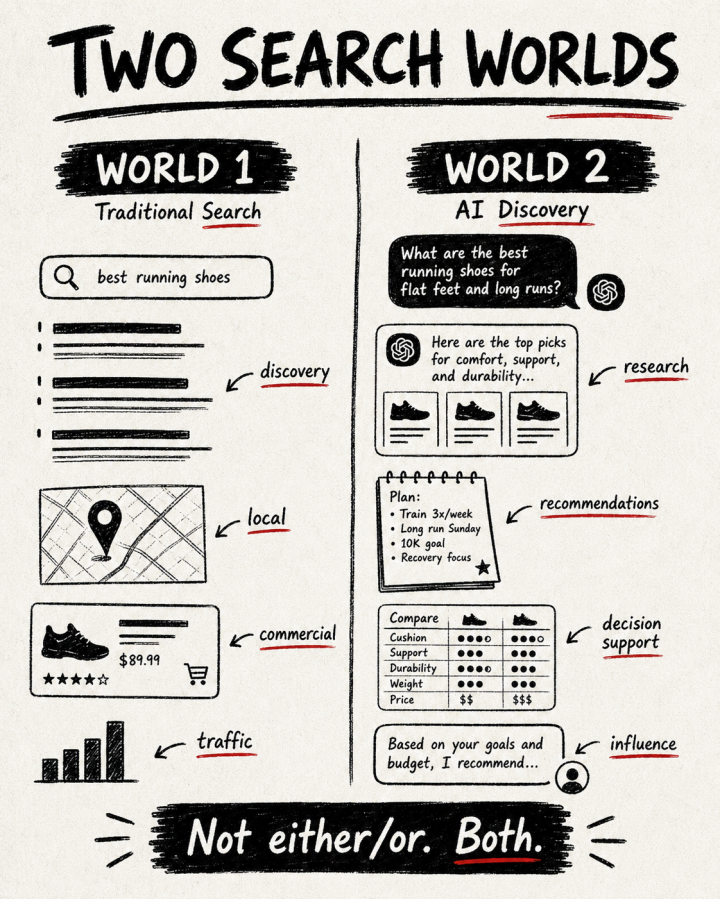
Figure 4. Traditional search and AI discovery now operate side by side.
Some businesses are far more exposed than others
AI will not affect every website equally.
The most vulnerable businesses are those whose value can be completely extracted and summarised without a visit.
Think:
- generic definitions;
- simple factual answers;
- commodity comparison content;
- thin affiliate pages;
- mass-produced ‘what is’ articles;
- reworded information available on 400 other sites;
- and content written primarily to satisfy a keyword rather than a human.
If the entire value of your page can be squeezed into three sentences, the AI did not create the weakness.
It exposed it.
Publishers are particularly vulnerable because information is the product. If a user gets the answer without visiting the article, the publisher loses the page view, the advertisement, the email signup and the chance to build a direct relationship.
Businesses selling an actual product or service are in a different position.
AI can describe a hotel. It cannot currently put your family in the pool.
It can compare shoes. You still need somewhere to choose the size, pay for them and complain that the courier placed the box directly beneath the ‘do not leave unattended’ sign.
For transactional businesses, websites remain essential.
Their role is simply shifting later in the journey.
Your website is not disappearing
There is a fashionable idea that websites will become irrelevant because AI agents will handle everything.
Eventually, agents may complete more tasks on a user’s behalf. I have explored that longer-term shift in Are We Preparing Websites for the Wrong Visitor?, including the idea of a human experience above a machine-readable capability layer.
But in the current market, the website still performs jobs that generated answers cannot fully replace.
It provides:
- proof;
- detail;
- trust;
- pricing;
- availability;
- customer reviews;
- terms and conditions;
- product configuration;
- booking;
- payment;
- account management;
- support;
- and first-party data.
The website may receive fewer casual information seekers. That does not make it less important. It may make every visit more important.
The challenge is that many websites are still designed as though traffic were free and plentiful.
They bury the useful information. They hide prices. They interrupt visitors with three pop-ups, a cookie banner, a chatbot and a newsletter request before the poor bastard has read the headline.
If AI sends fewer but more qualified users, wasting those visits becomes particularly stupid.
SEO is not dead. Lazy SEO is in trouble
The arrival of AI has created a thriving market for new acronyms.
AEO. GEO. LLMO. AI SEO.
Presumably, somebody is currently registering QWERTY Optimisation and preparing a webinar.
There are differences between ranking in traditional search and being cited by AI systems.
But much of the underlying work remains painfully familiar:
- make the site accessible;
- structure information clearly;
- publish accurate content;
- demonstrate expertise;
- build authority;
- earn credible mentions;
- answer genuine questions;
- create something original;
- keep brand information consistent;
- and stop filling the internet with reheated porridge.
AI engines need sources. Those sources still come from websites, databases, publishers, reviews, communities and other public evidence.
You do not need to throw away SEO and begin again. You need to recognise that SEO is no longer just rankings. It has become a broader visibility, trust and demand-capture system.
The job is no longer only to rank a page.
It is to make the brand understandable, credible and retrievable across multiple systems.
What marketers should actually do
Panic is not a strategy.
Neither is ignoring a clear change because its current market share is small.
The sensible response sits annoyingly in the middle.
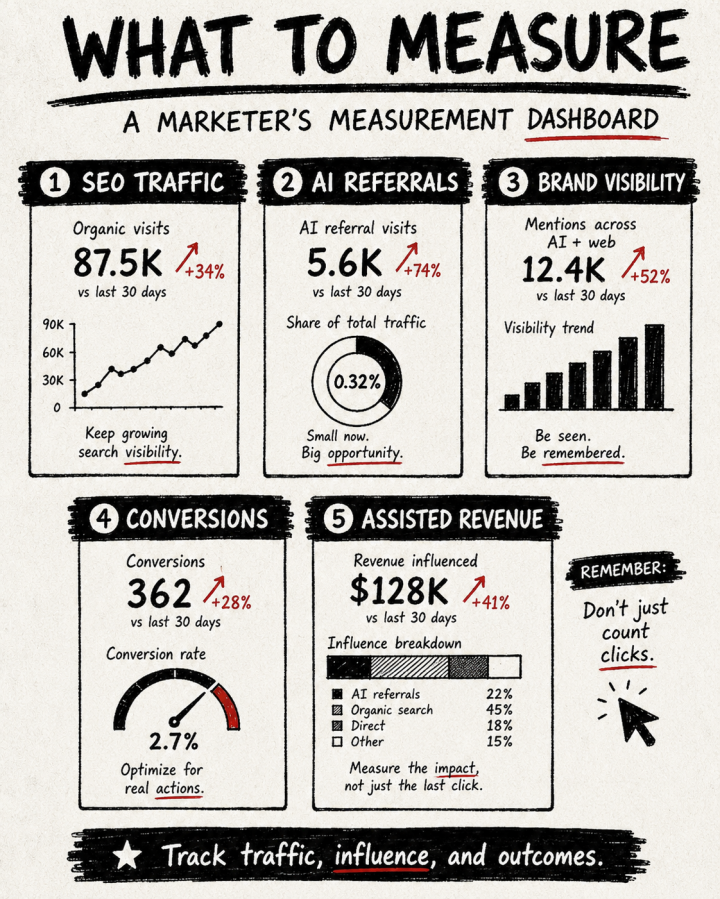
Figure 7. A practical measurement model for search and AI discovery.
1. Protect the traffic already producing results
Start with your own data.
Identify:
- which organic pages generate revenue;
- which queries are losing clicks;
- whether rankings have changed;
- whether impressions are stable while click-through rates decline;
- which page types trigger AI Overviews;
- and where traffic loss is concentrated.
Do not treat all organic traffic equally. A 30% decline in visits to a generic informational blog post may matter less than a 5% decline on your highest-converting category page.
Traffic is not the goal. Commercial value is.
2. Create a proper AI referral channel
Most analytics platforms do not hand you a perfect AI report with a little robot bow on top.
Create a channel grouping that identifies referrals from platforms such as:
- ChatGPT;
- Gemini;
- Perplexity;
- Copilot;
- Claude;
- and other relevant tools.
Then compare AI traffic with organic search across engagement, landing pages, conversion rate, assisted conversions, revenue, lead quality and customer value.
The volume may be tiny. That is fine.
Measure it before pretending it is either useless or revolutionary.
3. Track influence, not just clicks
Referral traffic captures only part of AI’s impact.
Monitor:
- branded search demand;
- direct traffic;
- customer surveys;
- ‘how did you hear about us?’ responses;
- brand mentions in AI answers;
- inclusion in comparison prompts;
- and whether AI-referred users convert later through another channel.
None of this will produce perfect attribution.
Perfect attribution was mostly a marketing bedtime story anyway.
The aim is not mathematical purity. It is enough evidence to make better decisions.
4. Become a source worth using
AI systems cannot cite your groundbreaking insight if your website contains the same generic dribble as everyone else.
Publish things with actual evidence behind them:
- original research;
- first-party data;
- expert commentary;
- transparent methodology;
- useful comparisons;
- clear definitions;
- case studies;
- tools;
- calculators;
- detailed product information;
- and strong customer evidence.
Give the internet something new to work with.
‘Ten tips for better productivity’ was not desperately needed the first 80,000 times.
5. Make important information easy to extract
Do not confuse clarity with dumbing things down.
Use:
- descriptive headings;
- concise answers;
- logical page structure;
- tables where appropriate;
- clear product specifications;
- named authors;
- dates;
- citations;
- structured data;
- and consistent entity information.
Humans benefit from this. Search engines benefit from this. AI systems benefit from this.
It is almost as though making information clear was useful before someone invented an acronym for it.
6. Build the brand outside your own website
AI visibility is not created only by editing your own pages.
Systems learn about brands through the wider public web.
That includes:
- media coverage;
- reputable directories;
- review platforms;
- industry publications;
- forums;
- YouTube;
- podcasts;
- community discussions;
- partnerships;
- and expert references.
This matters because a brand claiming it is brilliant is advertising.
Other credible sources saying it is brilliant is evidence.
7. Improve the website experience
When a visitor finally clicks, do not punish them for it.
Give them:
- a fast page;
- a clear value proposition;
- useful proof;
- transparent pricing where possible;
- obvious next steps;
- and fewer digital obstacles.
The future may bring fewer clicks. Make the remaining ones count.
8. Reduce your dependence on any single platform
Google has spent years proving that businesses should not build their entire future on rented land.
Social platforms have offered the same lesson, usually by changing the algorithm immediately after your strategy presentation.
Build assets you control:
- customer data;
- email lists;
- direct traffic;
- strong brand demand;
- useful products;
- loyalty;
- communities;
- and repeat customers.
The solution to becoming too dependent on Google is not becoming completely dependent on ChatGPT.
That is not diversification. That is moving your entire house from one volcano to another.
What not to do
There will be plenty of nonsense sold during this transition.
Avoid the obvious traps.
Do not abandon a profitable SEO program because somebody shared a chart showing 700% AI growth.
Do not assume every AI citation produces commercial value.
Do not purchase an expensive visibility tool and treat one prompt response as market truth.
AI recommendations can vary between models, users, sessions and prompt wording. SparkToro’s 2026 research found substantial inconsistency when volunteers ran repeated brand and product recommendation prompts across ChatGPT, Claude and Google’s AI experiences. AI visibility can be measured, but it should not be confused with a fixed search ranking.
Do not mass-produce more generic AI content to improve your visibility in AI.
That is how you turn AI use into AI slop – digital junk food with a prompt box.
It is like trying to solve ocean pollution by throwing in a better-designed plastic bottle.
And do not rename your existing SEO package ‘Generative Experience Optimisation’, add a shiny dashboard and triple the price unless something meaningful has actually changed.
A new acronym is not a strategy.
What the evidence shows, what we can infer and what remains unproven
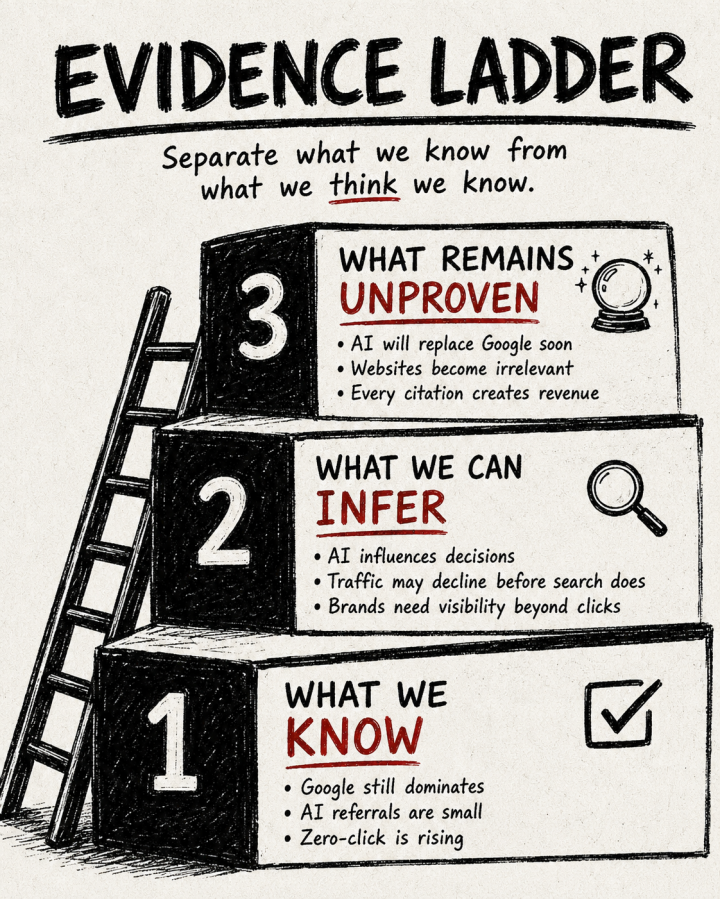
Figure 6. Separate current evidence, reasonable inference and prediction.
This debate improves immediately when we stop mixing facts, reasonable conclusions and predictions into one giant marketing smoothie.
What the evidence shows
As of mid-2026:
- Google remains the dominant traditional search engine.
- Google.com receives dramatically more website traffic than ChatGPT.com.
- Traditional and organic search still generate vastly more website traffic than AI referrals.
- AI referral traffic is growing quickly from a very small base.
- A large majority of Google searches end without a click.
- AI Overviews are associated with materially lower organic click-through rates.
- AI-referred users may show stronger engagement in some datasets.
What we can reasonably infer
- AI’s influence on decisions is probably larger than its referral traffic suggests.
- Informational websites are more exposed than transactional websites.
- Brand mentions and citations will become more important.
- Website traffic may decline even if overall search activity remains high.
- Search strategy will need to account for multiple discovery platforms.
- The visitors who do reach websites may increasingly arrive later in the decision process.
These are reasonable conclusions. They are not guaranteed outcomes for every brand.
What remains unproven
- That ChatGPT or another standalone AI platform will soon replace Google.
- That AI referrals will become as large as organic search within a specific timeframe.
- That appearing in AI answers consistently creates measurable revenue.
- That AEO requires an entirely separate discipline from good SEO, content, digital PR and brand building.
- That websites will become irrelevant.
- That anyone making confident predictions about 2028 has access to a functioning time machine.
The future may move quickly. It may also take strange turns.
Both are normal.
The real reality check
AI search is real.
Its growth is real.
Its effect on discovery is real.
But the takeover is being announced long before the numbers justify it.
Google remains the dominant force in search.
The more urgent problem for websites is that Google is becoming better at answering questions without sending users anywhere.
That changes the job.
Marketers can no longer think only about rankings and traffic.
We need to think about:
- visibility;
- influence;
- citations;
- brand demand;
- conversion;
- and the value created when the click never arrives.
That does not mean abandoning SEO.
It means growing up beyond it.
Google is still king.
It is simply becoming a king that keeps more of the kingdom for itself.
|
AI isn’t killing Google. Google is killing the click. |
Related reading from Jay Clair
- AI Isn’t Replacing Marketing Channels. It’s Adding Another Layer. – Why the future is accumulation, not simple channel replacement.
- Are We Preparing Websites for the Wrong Visitor? – How websites may evolve for humans and AI agents.
- Old Digital Marketing Terms Are Making Smart Work Sound Small – Why SEO, CRO and analytics now describe work far bigger than their labels.
- AI Use Is Not AI Slop. Stop Pretending They’re the Same Thing – Why AI-assisted work and mass-produced digital rubbish are not the same thing.
Sources
Primary data and research linked throughout the article:
1. Similarweb – The Top 100 Most Visited Websites in the World (May 2026) – Google and ChatGPT monthly website visits.
2. Statcounter Global Stats – Search Engine Market Share Worldwide – Google worldwide traditional search-engine share.
3. SparkToro – Search Happens Everywhere: Analysis of 41 Websites – Cross-platform search activity including traditional search, commerce, social and AI tools.
4. SE Ranking – AI Traffic Grew 16x from 2024 to 2026 – AI referral share, organic comparison, platform mix and engagement findings.
5. SparkToro – In 2026, Less than One Third of Google Searches Still Send a Click – 68.01% US zero-click figure using Similarweb data.
6. SparkToro – 2024 Zero-Click Search Study – Earlier US and EU zero-click benchmarks.
7. Ahrefs – AI Overviews Reduce Clicks by 58% – Estimated impact of AI Overviews on organic click-through rates.
8. SparkToro – AI Brand Recommendations Are Highly Inconsistent – Variation in AI brand and product recommendations across prompts and platforms.