A first-hand account of leaving Melbourne with a young family, landing in the Northern Rivers, and finding out what regional life gives you – and what it quietly takes.
I didn’t leave Melbourne because I hated it.
I left because at some point it stopped feeling like the city I grew up in.
Or maybe I changed.
Probably both.
I was born and raised in Melbourne. My parents are Mauritian immigrants, and when I was born they were living in St Kilda. They didn’t stay there long. Like a lot of migrant families, they slowly inched their way through the suburbs, chasing whatever the next version of ‘better’ looked like.
Eventually we landed in Doveton.
A classic south-east suburban ghetto. Although I didn’t know it was considered a shitty part of Melbourne until I got older. When you’re a kid, it’s just home. You don’t sit there comparing socio-economic data while riding your bike around the street like some tiny urban planner.
From there, my teenage years were spent further out in Narre Warren, and I went to school in Dandenong. Another proper melting pot of Melbourne. Then as an adult, I drifted back toward the inner-city areas, especially around St Kilda. My wife and I had a short stint in Seaford when we bought our first place, then we ended up back around the St Kilda orbit again, eventually in Caulfield North on the border of St Kilda East.
So Melbourne wasn’t just a place I lived.
It was the place that built me.
Then Covid happened.
And yeah, I know everyone has a Covid story. This isn’t going to be a full therapy session about lockdowns, press conferences and people suddenly becoming amateur authoritarian hall monitors. But for us, that period was the catalyst.
We had two young kids. One was five. One was one. Raising a little boy through that first stretch of lockdown, where so much of his tiny life was spent inside, was wild. Melbourne changed. The vibe changed. People changed. Or maybe the mask slipped. Either way, we felt disconnected from the place.
It felt like a city captured by fear and a weird lust for control.
And we were done.
We’d visited the Northern Rivers years earlier with friends and loved it. That idea had been sitting in the back of our minds for probably seven years. The funny part is those same friends ended up being our ‘in’ when we finally made the move. They were already settled up here.
So around New Year 2020/21, we packed up and left Melbourne.
Not perfectly.
Not with some glossy five-year relocation plan.
We moved like people who needed a change and were prepared to figure it out while already in motion.
Which is brave.
Also stupid.
Often the same thing.
We did not land in Mullumbimby straight away
The first stop was Alstonville.
Getting a rental in the Northern Rivers at that time was cooked. We ended up living in a caravan park for just over a month while trying to find somewhere to live.
Nothing says ‘fresh start’ like unpacking your life into temporary accommodation with two young kids while pretending everything is fine.
But we made it work.
We spent three years in Alstonville before buying a house in Mullumbimby. That’s where we eventually landed properly. And honestly, we were lucky. We bought for under a million, which sounds ridiculous to say about a regional town, but this part of the world is not cheap.
People hear ‘regional’ and think ‘affordable’.
Cute.
Not here.
The Byron Shire and surrounds are well sought after for a reason. Nature, beaches, hinterland, community, climate, food, markets, weirdos, families, old hippies, new hippies, people pretending not to be rich, people very obviously rich, and everyone in between.
It is beautiful.
It is expensive.
Both things can be true.
The first thing that hit me was the scenery
This sounds cheesy, but one of the first signs we’d made the right move was that no drive felt boring.
In Melbourne, driving was functional. Often annoying. Sometimes rage-inducing. A daily test of how much you could hate humanity while sitting at a red light.
Up here, every drive felt magical.
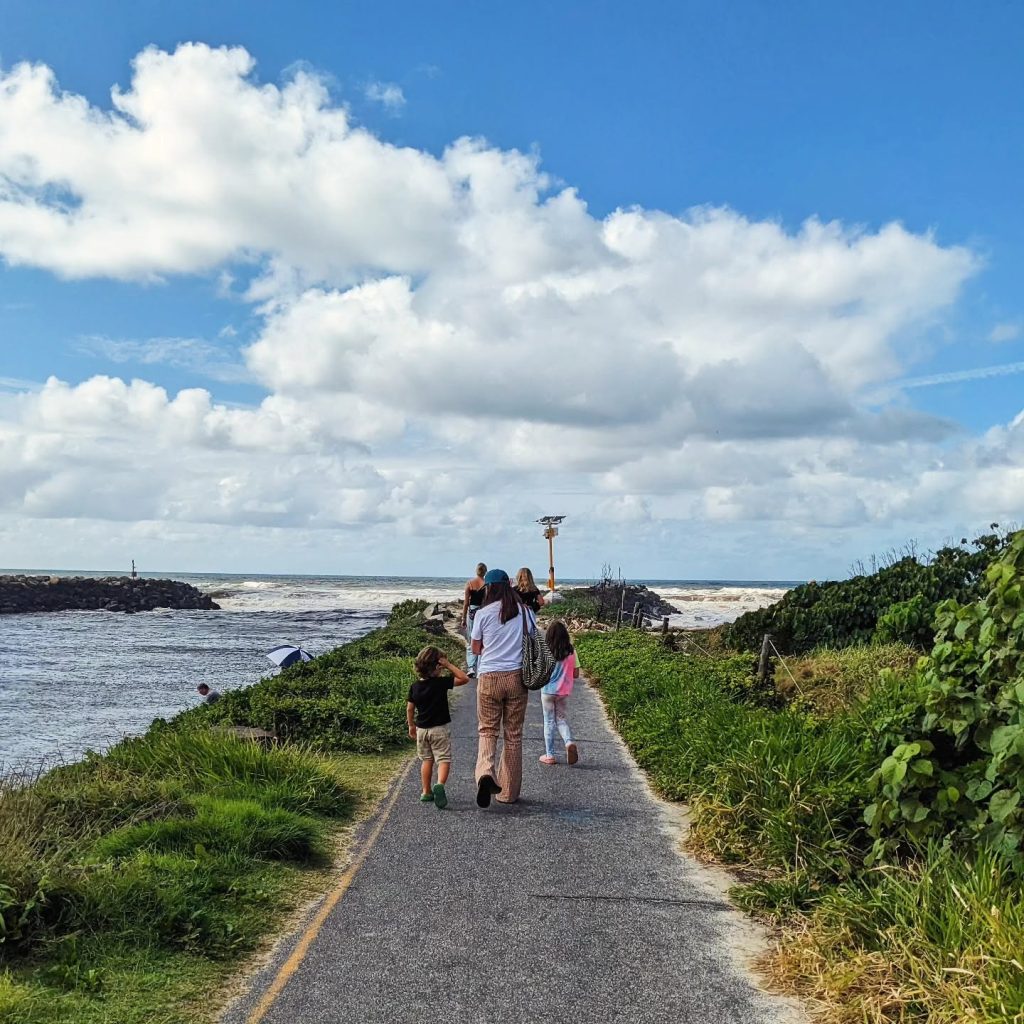
That sounds dramatic. It’s not.
The scenery around here does something to you. The hills. The cane fields. The light. The hinterland roads. The way the landscape opens up when you’re not expecting it. You’re driving to grab something boring and suddenly you’re looking at a view that makes you go, ‘How is this just… here?’
That feeling mattered.
Because the move wasn’t just about changing postcode.
It was about changing pace.
Mullumbimby has a vibe that is hard to explain
Mullumbimby is one of those places people describe badly.
They’ll say it’s hippy.
They’ll say it’s alternative.
They’ll say it’s changed.
They’ll say it’s not what it used to be.
All probably true.
But none of that really gets it.
Mullum has this small-town charm and character that feels increasingly rare. It’s slow, but not dead. Friendly, but not fake. Alternative, but not Byron-level performative. There’s a hippy vibe, sure, but without as much of the pretentiousness you can feel in Byron.
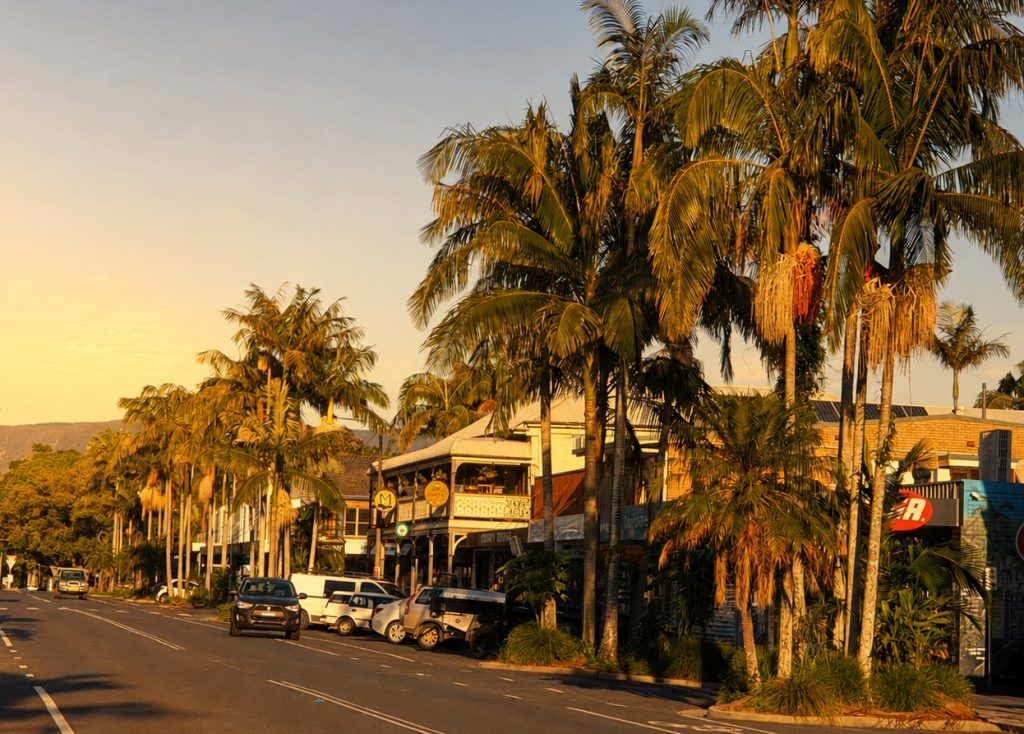
It has interesting people everywhere.
That’s one of the things I liked immediately. In a strange way, it reminded me of St Kilda. Not visually, obviously. Mullum isn’t exactly Fitzroy Street with a mountain view. But it has that same sense of ‘all kinds’ living near each other.
Characters.
Families.
Old-school locals.
New arrivals.
People who look like they’ve been fermenting something since 1987.
People who may or may not own shoes.
People with money pretending they don’t.
People with no money pretending they do.
You know. A town.
And yes, people say Mullumbimby has changed. Of course it has. Everywhere has changed. But it still holds onto something real. A small-town pulse. A bit of weirdness. A bit of magic.
The pace change is massive
People talk about slowing down like it’s automatically peaceful.
It isn’t.
At first, slowing down can feel like withdrawal.
Melbourne trains you to expect access. Food, shops, gigs, sport, public transport, late-night options, endless restaurants, big shopping centres, everything nearby, everything open, everything available.
Then you move regionally and the word ‘convenience’ starts quietly packing its bags.
There are no large shopping centres within about 40 kilometres. You need to plan more. You don’t just ‘quickly duck out’ for everything. A simple errand can become a small quest. Trades can be hard to get. Services are thinner. Availability is different. The world does not bend around your impatience.
Which is probably healthy.
Still annoying though.
The internet helps. Online shopping fills a lot of gaps. But not everything. Sometimes you just want the thing now, and regional life says, ‘That’s nice. Maybe Tuesday.’
Sometimes there is genuinely nothing to do
This is where people romanticising the move need to listen.
There are weekends where there is not much on.
In Melbourne, boredom is almost a personal failure. There is always something happening. A gig. A game. A restaurant. A bar. A market. A movie. A random event you don’t even want to go to but like knowing exists.
Up here, you need to make your own fun more often.
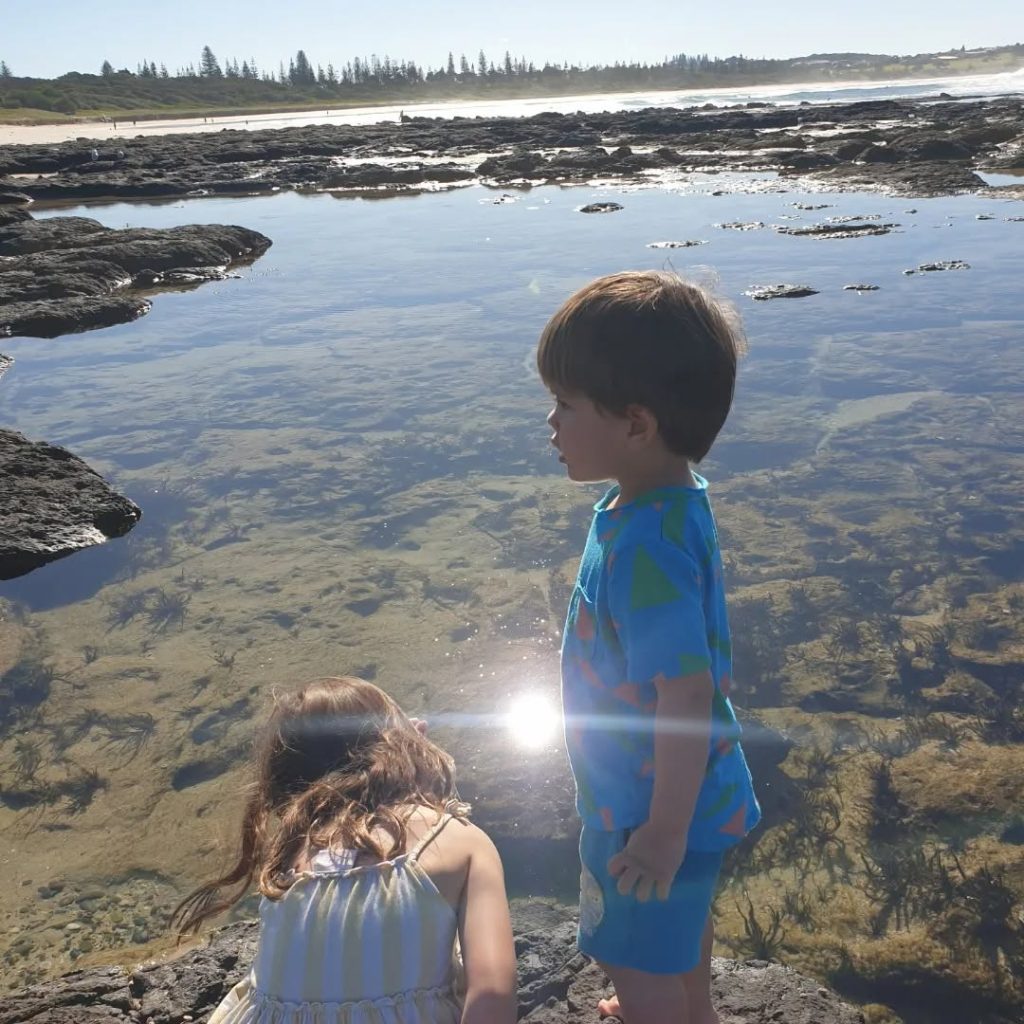
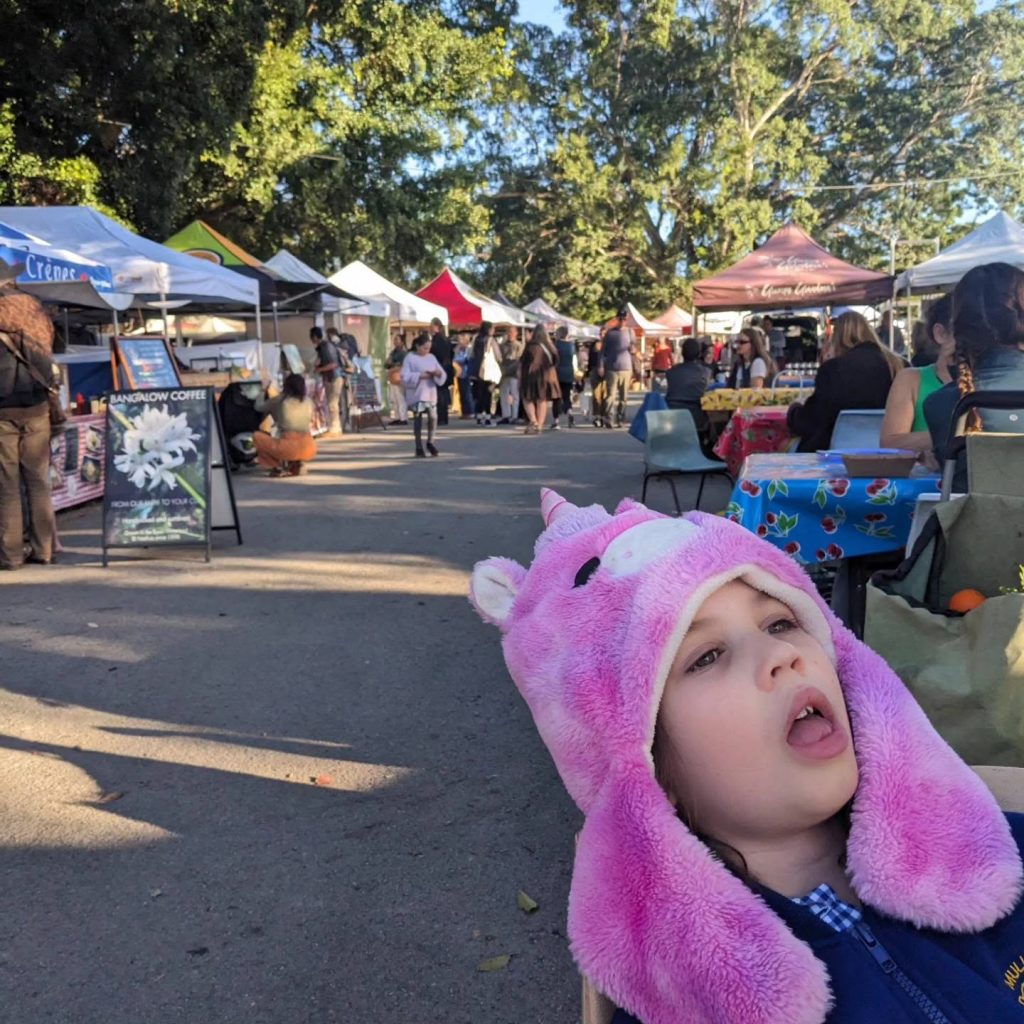
For us, weekends usually revolve around the kids. Soccer in the morning. Shopping routines. Then some kind of adventure. A walking trail. The pump track. A beach trip. A cafe stop. One of the amazing markets.
That’s the trade.
Less entertainment.
More nature.
Less abundance.
More intention.
I miss gigs. I miss having more music around. I miss the MCG. I miss going to watch Richmond. I’m glad I got to experience their finals run while still in Melbourne, because there is something about footy in that city that doesn’t translate anywhere else.
I miss public transport too. Not in a romantic way. More in a ‘wow, being able to get somewhere without driving was actually incredible’ way.
And I miss the food scene to a point. Although to be fair, the Byron Shire punches well above its weight. There’s great food here. Just not endless food. You can’t replace Melbourne’s food culture. You can only stop expecting everywhere else to be Melbourne.
Raising kids here feels like old Australia
This is probably the biggest win.
Our kids love it here.
They adjusted beautifully. They have great friends. They have space. They have community. They have a version of childhood that feels weirdly close to what we had growing up.
We live in a cul-de-sac full of kids, and they play out on the street.
Actually play.
Outside.
With other kids.
No calendar invite. No fluorescent vest. No adult standing there managing the emotional arc of a scooter race.
Just kids being kids.
That might be the part that makes me feel like we hit the jackpot the most.
Melbourne gave me a lot. I’m grateful for the place. But I don’t know if it could have given my kids this version of childhood. Not in the same way. Not with the same ease.
There is something beautiful about watching your kids have the thing you remember.
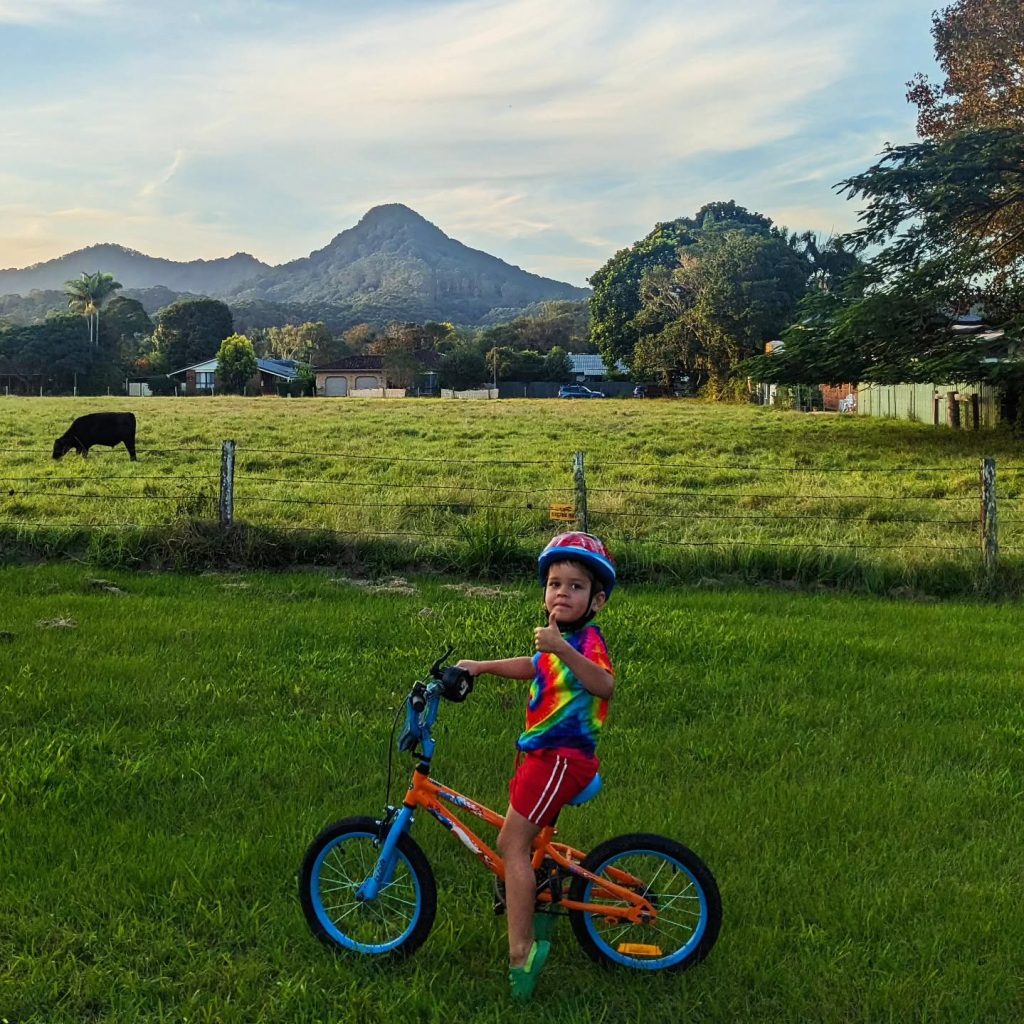
Street play.
Neighbourhood mates.
Freedom.
A little bit of danger, but the good kind. The kind that teaches them they’re alive.
But being away from family is heavy
Here’s the part that doesn’t fit neatly into the lifestyle dream.
Moving away from family has a cost.
At first, you think people will visit. You live in an amazing part of the world, so why wouldn’t they? Beaches. Hinterland. Markets. Great food. Beautiful drives. Come on. It’s not like we moved to a bunker outside Mildura.
But people don’t visit as much as you think they will.
A few do.
Most don’t.
Life gets in the way. Money. Time. Kids. Work. Flights. Excuses. Reality.
And then suddenly the distance feels less like a choice you made once, and more like something you keep choosing every day.
That gets complicated when parents get older.
My dad has dementia. That comes with a massive amount of guilt. There is guilt in taking the grandkids away. Guilt in not being there for the shitty parts of ageing. Guilt in seeing photos and videos from family events and realising you’re missing things that don’t happen twice.
Recently it was my dad’s birthday. I received images and videos from the day, and it hit me hard.
That’s the thing about loneliness.
It doesn’t always look like sitting alone in a room feeling sorry for yourself.
Sometimes it looks like your phone lighting up with a family video from a place you used to belong to, and suddenly the life you chose feels expensive in a way no bank statement can explain.
Making friends at 40 is bizarre
No one prepares you for this.
Making friends as a kid is easy. You both like bikes. Done.
Making friends in your twenties is usually proximity and bad decisions.
Making friends in your forties is different. Everyone has lives. Kids. Work. History. Existing circles. Exhaustion. Weird dietary requirements.
We’ve been lucky. We’ve made good friends here. Real friends. People we trust. People we’d leave our kids with. People we genuinely connect with.
But it’s still different.
Old friends have layers. They knew earlier versions of you. They remember the stupid stuff. They understand your references without needing a TED Talk. They know where you came from.
New friends can be great.
They’re just not carrying the same archive.
That’s no one’s fault. It just is.
And that’s one of the strange emotional truths of moving away later in life: you can belong somewhere new and still miss the people who knew the old map.
We nearly moved back
Before we bought in Mullumbimby, we nearly moved back.
Not to Melbourne exactly, but back toward Victoria. We put offers on two houses in country Victoria. Both fell over for different reasons.
At the time, it felt frustrating.
Looking back, it felt like a sign.
We stayed.
And I’m glad we did.
But I think it’s important to say that the move wasn’t one long upward curve of ‘best decision ever’. There were doubts. Big ones. There were moments where the pull of family and familiarity was strong. Moments where the loneliness felt too sharp. Moments where the practical stuff wore thin.
That’s normal.
Big moves are not clean.
They don’t solve your life. They reveal it.
Is Mullumbimby cheaper than Melbourne?
No.
Next question.
Honestly, this is one of the biggest myths about moving regionally. People assume if you leave the city, your cost of living magically drops.
Maybe in some places.
Not here.
This region is expensive. Housing is expensive. Insurance can be brutal, especially with weather risks like flooding. Trades are hard to get. Groceries are not magically cheap because there are trees nearby. Petrol matters because you drive more.
Childcare was definitely cheaper for us, which helped.
But overall, this is not some affordable escape hatch from city life.
We are financially better off, but that’s because we planned for it, I have a good job, and we’ve always lived below our means. Not because Mullumbimby is cheap.
It isn’t.
Regional living doesn’t automatically make life affordable.
Sometimes it just changes what you’re overpaying for.
Work was the part that could have gone wrong
This is the bit people really need to think about before making the move.
Jobs are probably the hardest practical part.
I was lucky. I worked remotely for my old employer for a while, which gave us stability. Then I ended up with what I’d call a dream job as Head of Marketing at Bluesfest. After that, I moved into a solid corporate role with NRMA, and I’ve recently been promoted.
So career-wise, I feel blessed.
But I don’t think my experience is automatic.
I have a digital marketing skillset, and that’s relatively rare in the region. That helped. Remote work helped. Being able to plug into bigger businesses from outside a capital city helped.
If your career depends on being physically near a CBD, or if you need a deep job market around you, think carefully.
The move didn’t kill my ambition. But it did change the frame.
I didn’t want to grind for the sake of grinding anymore. I wanted a different life around the work. A better backdrop. A better rhythm. A better childhood for the kids.
Work still matters.
It just isn’t allowed to be the whole bloody meal.
The culture is different, but not simple
Mullumbimby is a green-leaning place.
That won’t shock anyone.
But it doesn’t feel like the city version of green politics to me. It feels more conservationist. More nature-based. More connected to land and place. Less like something cooked up in an inner-city meeting room by people who discovered compost six months ago.
I can live with that.
In many ways, Mullum suits me because I don’t feel especially connected to the mainstream. Politically, culturally, whatever. The older I get, the more I question the default story of Australia being the dream everyone says it is.
A trip to Japan only sharpened that.
I still have an urge to keep moving. My wife and I have lived in nine different homes in nearly twenty years together. We clearly have a habit for change. This move was just a much bigger version of that instinct.
But for now, Mullumbimby fits.
It’s not perfect.
But it fits.
Who should move to Mullumbimby?
Move here if you want to slow down.
Move here if nature matters to you.
Move here if you have kids and want them to experience a childhood that feels a bit less scheduled, sanitised and boxed in.
Move here if you can work remotely, run your own thing, bring a portable skillset, or accept that the job market is not going to behave like Melbourne.
Move here if you’re okay with fewer options but better scenery.
Move here if you want community, but understand that community doesn’t instantly mean deep friendship.
Move here if you can handle a slower pace without mistaking it for failure.
Move here if you’re trying to escape the rat race and actually mean it.
Because some people say they want slower.
What they really want is Melbourne with more trees.
That is not the same thing.
Who should not move here?
If you need constant convenience, don’t.
If you need nightlife, don’t.
If you need major shopping centres, don’t.
If you need public transport to make your life work, think very carefully.
If you expect regional living to be cheap, please update your software.
If you’re a city wanker who wants a regional postcode but still expects Melbourne to be waiting around the corner whenever you get mildly inconvenienced, you’ll last about six minutes.
And honestly, that’s fine.
Not every place is for every person.
That’s the point.
My advice before making the move
Visit first.
Not just for a cute weekend.
Spend time here. Go to the shops. Drive around. Get bored. Go to the pub on a busy night. The Middle Pub is a good test. Sit there and ask yourself: ‘Is this my thing?’
Not ‘is this charming?’
Of course it’s charming.
Ask: ‘Can I live inside this rhythm?’
That’s a different question.
Because the pace change is massive. It’s hard to explain until you feel it. You lose convenience. You lose access. You lose the easy social shorthand of your old life. You gain space, nature, community, and a different kind of childhood for your kids.
But you don’t get those things for free.
Would I do it again?
Yes.
Absolutely.
But I’d plan it better.
We rushed. I don’t regret where we landed, because I love where we live. I genuinely think we hit the jackpot. But if I had my time again, I’d probably do a caravanning trip first and explore more regions before locking anything in.
There is so much out there.
Australia is bigger and stranger and more varied than we give it credit for when we’re stuck in city mode.
Still, Mullumbimby has given us something Melbourne couldn’t.
A slower life.
A better family rhythm.
Kids playing in the street.
Magical drives.
Nature as the default.
A town that feels like it has a pulse.
It has also given us loneliness, guilt, fewer conveniences, expensive insurance, and the occasional weekend where there is genuinely nothing to do.
That’s the honest version.
We moved.
Life got better.
And the bill arrived in ways we didn’t expect.
Would I pay it again?
Yeah.
I would.
Mullumbimby at a glance
This is the practical bit for readers who want suburb context after the personal story. Put it near the end, not at the start. Lead with the lived experience; let the data back it up.
| Location | Mullumbimby is in Byron Shire, in the Northern Rivers region of NSW. |
| Population | 4,180 people in the 2021 Census suburb/locality area. |
| Median age | 45. |
| Households | 1,816 private dwellings; average 2.5 people per household. |
| Income | Median weekly household income was $1,355 in the 2021 Census. |
| Housing costs – 2021 Census | Median monthly mortgage repayments were $1,929 and median weekly rent was $500. |
| Current market snapshot | realestate.com.au listed median property prices over the last year at about $1.15m for houses and about $729,750 for units, with houses renting around $950 per week and units around $620 per week. |
| Lifestyle context | Official visitor material positions Mullumbimby as a colourful town in the Byron Bay region, with art, cafe culture, hinterland access and a strong local identity. |
| My version | Beautiful, expensive, slower than Melbourne, better for our kids, and not for anyone who wants city convenience with a rural costume on it. |
Sources and further context
Use these as contextual links rather than heavy academic citations. The article should still read as a first-hand account.
- ABS 2021 Census QuickStats for Mullumbimby – Official Census context for population, median age, household income, rent and mortgage repayment figures.
- realestate.com.au Mullumbimby property market profile – Current property market context for median house/unit prices and rent estimates.
- Visit NSW Mullumbimby guide – Official visitor context for Mullumbimby as part of the Byron Bay/North Coast region.
- Byron Shire Council – Local council context, services, events, emergency dashboard and place information.
- Jay Clair Medium article on Alstonville – Your earlier first-hand article about the first Northern Rivers landing point before Mullumbimby.