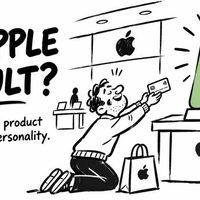
Apple has a cult-like following. The giveaway is when someone treats criticism of their phone as criticism of their intelligence.
Owning an iPhone doesn’t make you a cult member. But when a brand becomes proof of your taste, creativity or superiority, you’ve given a corporation a fairly generous role in your personality.
And the annoying part? Apple makes good products. Sometimes excellent ones. That gives the devotion something solid to hide behind. You start by defending a useful tool and end up defending decisions you’d call bullshit on if Samsung made them.
That’s the cult of Apple worth talking about. The bit where being a customer turns into a loyalty test.
The cult of Apple sells a flattering version of you
A computer can help you make things. Buying one cannot make you interesting.
Apple’s great marketing achievement was making those two propositions feel closer together.
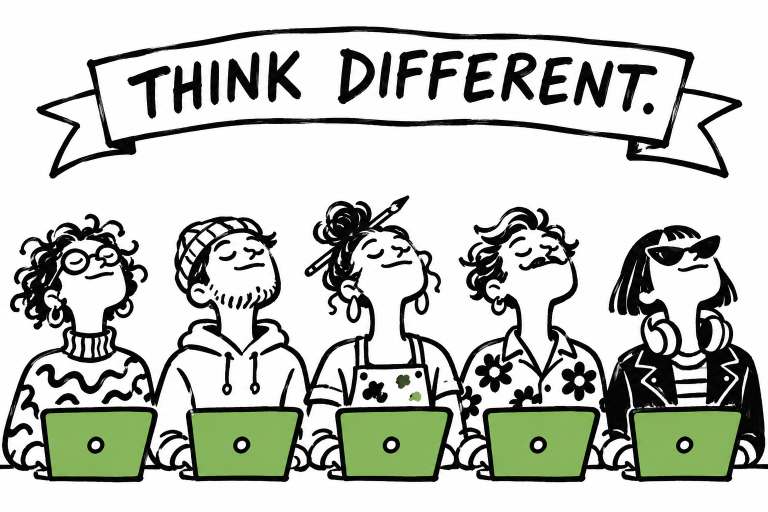
In September 1997, Steve Jobs introduced the “Think Different” campaign to Apple employees. The 1997 “Think Different” speech preserved by the Steve Jobs Archive explicitly connected the brand with people whose passion could change the world. This was a statement about values and identity, rather than a tour of processor specifications.
It was also a bloody good way to sell computers.
You weren’t simply choosing between Apple computers and a PC running Microsoft software. You were being invited to recognise yourself among the creative, independent people pushing things forward.
Apple sold you the identity of an independent thinker. All you had to do was buy the same computer as the other independent thinkers.
The trick is that purchasing the symbol is easier than doing what it symbolises. A MacBook Pro can run creative software. It cannot supply the idea you’ve been avoiding for six months.
There’s a reason I called the Apple section of You’re in a Cult “Apple and the Church of Product Worship.” The product starts as something you use. Then it becomes evidence that you’re the sort of person you like to think you are.
You like the design. Fair enough.
You conclude that liking the design proves you have superior taste. Now the product has a second job: protecting your opinion of yourself.
Steve Jobs and the presentation that became a sermon
Watch a product launch with the sound off. The congregation is already seated.
A charismatic founder walks onto a sparse stage. The audience waits for the reveal. For a moment, a room full of adults looks as though the future of humanity depends on what comes out of his pocket.
Steve Jobs was exceptionally good at making a presentation feel consequential. And sometimes it was. Apple’s original iPhone announcement in January 2007 brought a phone, an iPod and internet functions together around a large multi-touch interface. There was substance behind the performance.
That matters. Dismissing everything as hype is as lazy as applauding everything as innovation.
Doing something brilliant earns a company credibility. Apparently, for some customers, it also earns a lifetime exemption from being questioned. One great product becomes a character witness for every decision that follows.
Eventually the customer starts supplying explanations before the company has bothered.
It costs more because it’s better. It has fewer options because it’s simpler. The limitation must be deliberate, therefore the limitation must be wise.
Or they made a decision that suits their business more than it suits you. You can say that. The phone will still work.
You can admire Jobs without treating every subsequent product announcement as an interpretation of scripture.
The cult of Mac existed before the iPhone
This phenomenon didn’t begin with Instagram arguments about camera quality.
In their 2005 paper, The Cult of Macintosh, researchers Russell Belk and Gülnur Tumbat used interviews, observation and historical material to examine the quasi-religious aspects of Mac devotion.
They identified recurring myths around Apple’s origins, Jobs as a saviour figure, an opposing enemy and the company’s revival. Their focus was devoted Macintosh enthusiasts, rather than a representative diagnosis of everyone who owned an Apple device.
That’s evidence of a pattern among enthusiasts. Your aunt using an iPad to play Sudoku remains your aunt using an iPad to play Sudoku.
The cult of Mac offers a familiar human story: we understand something outsiders don’t. Our tools express our values. Their tools reveal their limitations.
You can hear the same structure in food tribes, political camps and fitness communities.
Once a preference becomes a badge of belonging, a competitor’s success can start feeling strangely inconvenient. A better Samsung feature ought to be useful information for someone shopping for a new phone. Inside a brand war, it becomes something to explain away.
You bought a phone and somehow ended up working in unpaid reputation management. At least the staff should get a discount.
Does Apple brainwash its users?
“Brainwash” does a lot of work for people who can’t be bothered asking why someone likes a phone.
You don’t need an elaborate theory of mind control to explain why Apple users keep buying Apple products. Familiarity, useful features, attractive design, habit and the effort involved in switching can account for plenty.
There is also the ordinary discomfort of admitting that an expensive decision might deserve another look.
Imagine buying an iPhone Pro Max. You research it, justify it and tell a few people why it was worth the money. Someone then points out a weakness.
Now admitting they have a point feels like admitting you spent too much. Easier to decide they’re an idiot. Lovely. Purchase justified, ego intact, conversation ruined.
That second response is the behaviour worth examining. Calling someone brainwashed can become an excuse to avoid understanding it.
Besides, the anti-Apple camp can perform the same routine. If every Apple release is automatically stupid and every Apple customer is a gullible “fanboy”, you haven’t escaped tribal thinking. You’ve found a different comment section.
Apple’s ecosystem: convenience with a leaving cost
The ecosystem is where the argument gets awkward. Because the convenience is real.

Apple’s Continuity features describes features that connect Mac, iPhone, iPad and Apple Watch, including Handoff and Universal Clipboard. Depending on device and software compatibility, those connections can reduce everyday hassle.
That is a practical reason to like Apple.
If your laptop, phone and tablet already work comfortably together, another Apple device may be the easiest purchase. Ease of use has value. Time spent relearning an interface has a cost.
But the calculation changes as your work, subscriptions, accessories and habits accumulate around one system. Replacing a phone can start feeling like reorganising part of your life.
In the Apple Cult File, I describe this as belonging becoming infrastructure.
The distinction to watch is between “this still serves me” and “I can’t be bothered finding out whether something else would serve me better”.
Same purchase. Very different reasons. It helps to know which one you’re paying for.
You don’t need to leave the Apple world to prove your independence. You do need to be able to acknowledge its trade-offs without acting as though you’ve betrayed someone.
The Apple Store, the packaging and the upgrade ritual
Walk into an Apple Store and the devices have more breathing room than most people renting in Sydney. Of course they look special. They’ve each been given their own little stage.
Then comes the launch video, the reviews and the packaging you open more carefully than your own mail. By the time you’ve finished watching other people unbox the thing, you can feel overdue for an upgrade you hadn’t needed last week.
Then comes the awkward question: what does this upgrade actually improve?
A better screen may matter to you. So might camera capability, battery life or an app your work requires. A developer and someone checking emails have different needs.
“Pro” on the box doesn’t resolve either person’s requirements.
Adding “Max” doesn’t mean your emails have become more demanding either.
Before you buy new, identify the problem your existing device fails to solve. If you can’t name one, the desire may still be real. Just call it desire.
You’re allowed to want a nice thing without commissioning a fictional business case.
When Apple users become brand defenders
The warning sign isn’t how many Macs you own. It’s how much honesty your loyalty permits.
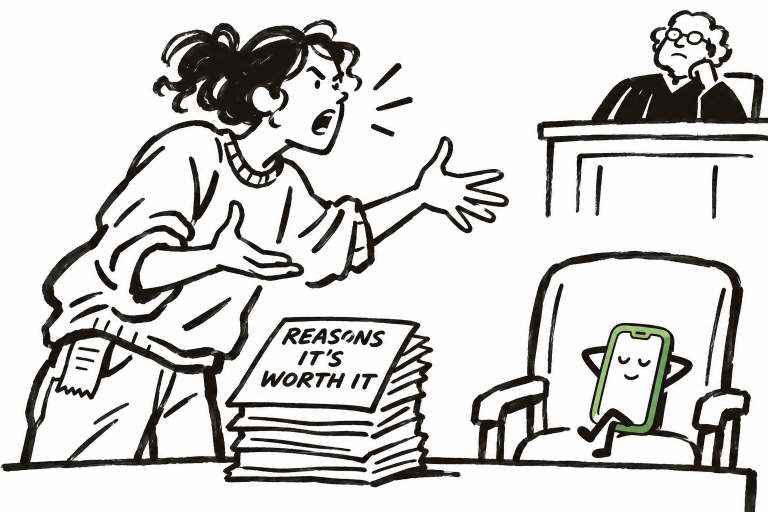
Can you say a particular upgrade looks unnecessary? Admit an Android device would suit someone else? Recommend a cheaper computer when it meets the brief?
Can you hear criticism without immediately questioning the critic’s intelligence?
These are ordinary customer behaviours. They become difficult when the logo carries too much of your identity.
In You’re in a Cult, the wider argument is about recognising these patterns in our own lives, rather than collecting examples of other people being idiots. Apple gets its own Cult File because it makes the mechanism easy to see: useful tools, flattering stories, shared rituals and loyalty that can outgrow its reasons.
That’s the thread running through You’re in a Cult: Why Everyone’s Lost Their Mind and How to Get Yours Back. We can spot someone else defending a ridiculous belief from across the room. Catching ourselves doing it takes a bit more honesty. Especially when ours came in such a nice box.
The point isn’t to throw your iPhone into a river and announce your liberation on a replacement device.
Keep it. Enjoy it. Buy another if it earns the money.
But when someone criticises Apple, remember whose name is on the receipt.
You paid them. They can handle a bit of feedback.






1 Response
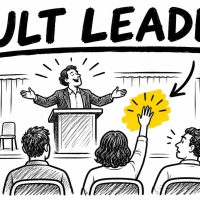
[…] A charismatic leader can make a room full of strangers feel like somebody finally gets them. New members might find mates, purpose or an answer to something that’s been eating at them. A good night with people you like is a good night. That’s precisely why you go back. […]