

Want to know how much power someone has? Watch what happens when a follower says no. Anybody can look generous when the room agrees with them. The interesting bit comes when someone asks where the money went.
The common characteristics of a cult leader are easier to spot when you look at what they do with a bit of trust. Charisma gets you through the door. Claims of exceptional insight give the leader a reason to make decisions for you. Then comes the authoritarian rule, manipulation, isolation, punishment of dissent and exploitation. By the time you want to say no, half your life might be sitting in that room.
I’m using cult here for a high-control group organised around a leader or leadership circle. I’d love to think I’d spot one a mile away. Of course, it’s easier to see the bullshit when it comes from a stranger. Try hearing it from someone who helped you through a rough patch.

1. Charisma makes the first yes easy
A charismatic leader can make a room full of strangers feel like somebody finally gets them. New members might find mates, purpose or an answer to something that’s been eating at them. A good night with people you like is a good night. That’s precisely why you go back.
The first yes might be to dinner. By the time someone asks you to share something private, they’ve remembered your name, introduced you to your new mates and made you feel like you belong. Imagine the same request from a bloke with a clipboard outside Woolies.
2. An authoritarian cult leader makes disagreement personal
The leader’s opinion becomes the group’s decision, and the group starts treating a question about that decision as a problem with the person asking it. You raise a concern about money. Twenty minutes later, you’re explaining why you have trouble trusting people. Funny how the books still haven’t come out.
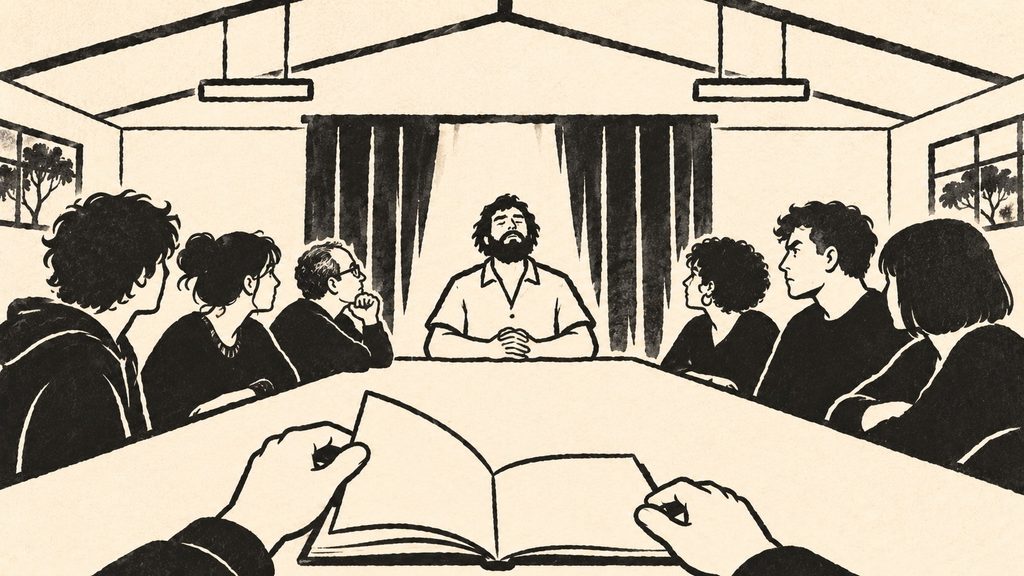
How the inner circle keeps the leader in charge
A leader can exert power through an inner circle. They decide who gets a word with the boss and which words get back to him. Watch who can overrule the leader, who gets to see the finances and where a member can take a complaint. If every route leads back to the same person, the complaints process is a roundabout.
3. Grandiose claims put the leader above scrutiny
One leader says they know God. Another claims to understand human potential so thoroughly that any criticism proves the critic has work to do. A fundamentalist religious setting and a self-improvement seminar can have very different beliefs and still give one person the final word on everyone else’s life.
What about narcissism, malignant narcissism and delusion?
A bloke demands admiration, makes grandiose claims and seems perfectly happy to exploit people. You can call him a narcissist or reach for malignant narcissism. I’d still want to know what he did when someone told him no. Mental health professionals diagnose narcissistic personality disorder using clinical criteria. Calling a leader delusional also makes a claim about their mental state that you may have little basis to judge. You can document what someone demanded, how they responded to criticism and who bore the cost. Start there.
4. Manipulation makes members doubt their own judgement
A manipulative leader can change the rules after the fact and use shame to make a follower feel responsible for breaking them. A promise falls through, and suddenly the conversation is about whether you believed hard enough. A private confession becomes material for a public dressing-down. After a while, you might start editing your own thoughts before anyone else has to.
In a 2023 study of interviews with 52 ex-members from different groups, Sarah E. Feliciano identified coercive control tactics in all 52 accounts. Manipulation, intimidation and micromanagement were among the most commonly identified tactics. Those interviews tell us what happened in those groups. They don’t give us a headcount for every high-demand group out there.
5. Isolation makes the cult harder to leave
A cult leader may isolate followers by discouraging outside friendships, treating independent sources as hostile or filling members’ schedules until there’s barely time for a phone call home. The more of your life you build within the cult, the more you stand to lose in one go. Imagine changing your mind about something and realising that the decision could cost you your job, your closest mates and the person you share a bed with.

Jim Jones and Peoples Temple
In 1978, US congressman Leo Ryan travelled to Jonestown, the Peoples Temple settlement led by Jim Jones in Guyana, to investigate reports of abuse. Some residents asked to leave with his delegation. Ryan and four others were killed in an attack at a nearby airstrip. More than 900 people died in the events associated with Jonestown, including children. It’s worth remembering the residents who tried to leave whenever someone talks about cult followers as if they all went along blindly.
6. Punishment makes a cult follower think twice about saying no
Punishment can be overt, like threats, or quieter, like having people you’ve known for years suddenly refuse to speak to you. Other cult members see what happens and learn what it costs to speak up. The leader doesn’t have to intimidate everybody individually if the group can do it over lunch.
This is where brainwashing can be too blunt a word. Coercive control gives you something specific to look for. Who monitors whom? What happens when someone breaks a rule? Can they refuse a demand without losing access to the people or resources they rely on?
7. Exploitation turns loyalty into something the leader can use
Start with an ordinary question. What happens if you stop paying, stop doing the unpaid labour or decide you’d rather keep your private life private? Exploitation can involve money, work, sensitive personal information or sexual abuse. The details matter. So does whether a person can withdraw consent without someone making them pay for it.
Keith Raniere and NXIVM
NXIVM offered personal-development programmes. According to US federal prosecutors, a secret group within NXIVM known as DOS required recruits to provide compromising material as collateral, which could be used against them if they disclosed the group or refused demands. NXIVM founder Keith Raniere was convicted in 2019 and sentenced to 120 years in prison in 2020 for offences including racketeering and sex trafficking. The collateral shows exactly how a private disclosure can become a tool of control.
How does someone become a cult leader?
One route is to earn trust by offering something people genuinely want, then use that trust to claim authority over decisions that used to belong to them. The leader starts as someone you ask for advice. Eventually you need their blessing to date someone, talk to your sister or take a weekend off. Each new demand can look small next to the one you agreed to last week.
Why do people become cult followers?
People may join for friendship, spiritual meaning, personal development or because someone finally has an answer that makes sense to them. Months or years later, their relationships and sense of self might be tied up in the place. I reckon most of us imagine walking out on the first night. Try walking out when the person you’d normally call for a lift is still sitting inside.
What happens when someone changes their mind?
That’s the question I keep coming back to in You’re in a Cult. I wrote it because belonging can make an ordinary change of mind feel like a public betrayal. It can happen in a political tribe, a wellness crowd or a group chat where everyone’s spent three years agreeing about the same bloke.
Watch how a leader treats the person who used to agree with them. You’ll learn more in five minutes than you will from the bloke’s entire podcast.
