It’s easy to spot a cult when someone else is in it.
The matching outfits help. So does the bloke announcing that God has chosen him to sleep with everybody’s wife. Subtle clues.
It gets harder when the group looks like your friends, speaks your language and agrees with everything you already believe. Then it’s a community. A movement. Finally, people who get it.
That gap is what makes books about cults worth reading. Some investigate notorious cults and the people who ran them. Others examine the everyday habits that make us susceptible: wanting to belong, trusting a charismatic leader, defending an identity long after it stops making sense.
This list brings those angles together. There’s investigative journalism, a survivor memoir, practical analysis and a wider look at modern belief systems. All 12 are nonfiction; each earns its place by helping answer a different question.
And yes, my own book is first. I wrote the bloody thing. You weren’t expecting me to hide it behind the pot plants.
1. You’re in a Cult — Jason Clair: modern groupthink and belief systems
Best for: recognising cultish behaviour somewhere uncomfortably close to home.
Most people hear “cult” and picture a compound. In You’re in a Cult: Why Everyone’s Lost Their Mind and How to Get Yours Back, I look at the patterns that can turn ordinary belonging into something much less healthy.
Politics. Wellness. Fitness. Tech. Food tribes. Online communities where everyone’s apparently an independent thinker, yet somehow they’ve all independently arrived at the same seven sentences.
My gateway into this was five years of veganism and the realisation that I’d turned a dietary choice into a moral identity. Veganism itself wasn’t the problem. My inability to separate what I ate from whether I was a good person was doing plenty of damage on its own.
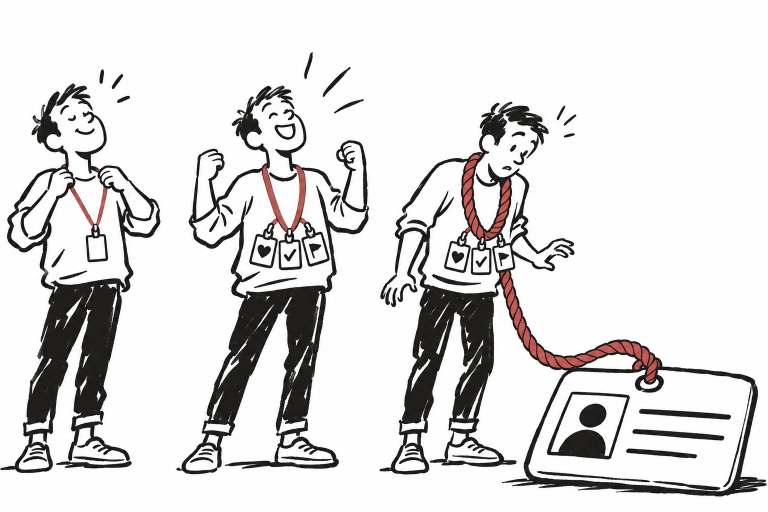
The book follows that thread through charismatic authority, loaded language, purity tests and the point where disagreement becomes disloyalty. The Cult Files apply that lens to subjects including Apple, crypto, CrossFit, wellness and food tribes. There’s also a Cult Audit to turn the questions back on yourself.
I use “cult” broadly and metaphorically here. Enjoying a gym or owning an iPhone doesn’t put you in the same situation as someone trapped in an abusive organisation. The point is to recognise patterns of conformity without pretending every example carries the same harm.
Start here if you want a blunt, funny examination of how people hand over their judgement while congratulating themselves on thinking freely.
2. Cultish: The Language of Fanaticism — Amanda Montell
Best for: understanding how words create belonging and shut down thought.
Before a group gets your loyalty, it usually teaches you how to talk.
Amanda Montell’s Cultish explores how language operates across groups ranging from Heaven’s Gate and Scientology to fitness communities and social media followings.
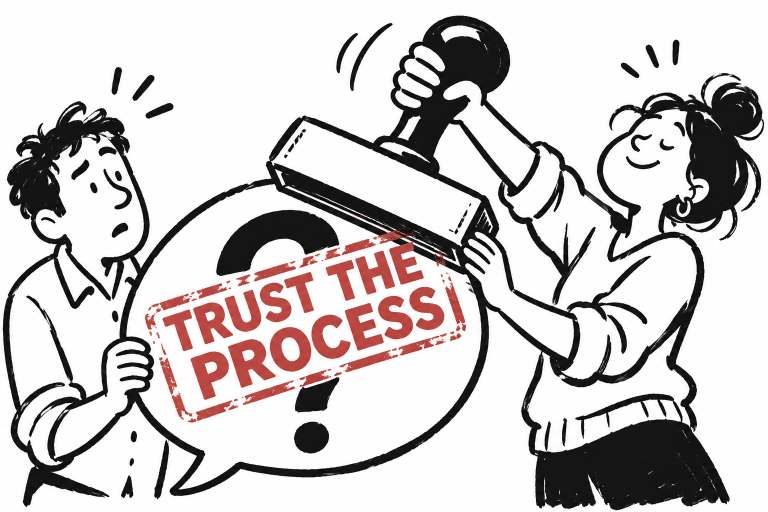
Special vocabulary can help people connect. It can also divide the world into those who understand and those who need to shut up and trust the process.
Montell’s focus makes this a useful companion to my own book. Where I follow identity, loyalty and modern tribes more broadly, she puts language under the microscope.
Choose it if you’ve ever heard a perfectly ordinary question answered with a slogan and thought, “Right. Apparently that’s the conversation finished.”
3. Combating Cult Mind Control — Steven Hassan
Best for: a practical framework for examining coercive influence.
“Brainwash” is an efficient word. Unfortunately, it can become a substitute for explaining what actually happened.
In Combating Cult Mind Control, Steven Hassan draws on his experience in the Unification Church and his subsequent work on destructive influence to explain how control develops and how people can recover their independence.
His approach encourages readers to examine restrictions on behaviour, information, thought and emotion. That gives you more to work with than deciding a group seems weird.
Treat it as Hassan’s framework for understanding coercive control, rather than a magic test that settles every argument about whether something is a cult.
This is the practical choice when your question is less “What happened in that notorious group?” and more “What am I actually looking for?”
4. The Road to Jonestown — Jeff Guinn: Jim Jones and Peoples Temple
Best for: understanding the history behind a catastrophe.
Starting with Jonestown’s final day tells you how the story ended. It doesn’t explain how people got there.
Jeff Guinn’s The Road to Jonestown: Jim Jones and Peoples Temple follows Jones’s life and the development of the movement that ultimately relocated to Guyana.
Drawing on interviews, FBI files and historical research, Guinn examines the distance between the movement’s early promises and its devastating end.
That makes the “road” in the title the important bit. If you only study the final horror, you can miss the earlier decisions, commitments and compromises.
It’s also worth resisting the shorthand of “mass suicide” as a complete explanation of Jonestown. Children were among those killed. A tidy phrase can conceal an awful lot of coercion and murder.
Choose this for a sustained historical investigation of Jim Jones, rather than a quick tour of the grisly headlines.
5. Going Clear — Lawrence Wright: Scientology and the prison of belief
Best for: investigative journalism about institutional power and commitment.
The celebrity connection might bring readers in. The question of belief is what makes this book belong here.
Lawrence Wright’s Going Clear: Scientology, Hollywood, and the Prison of Belief investigates Scientology through archival research and more than 200 interviews with current and former members.
It examines L. Ron Hubbard, David Miscavige and the institution built around their authority. Wright’s reporting provides a way into questions about hierarchy, loyalty and why people remain committed to demanding systems.
The subtitle gives you a useful question to carry into the book: when does a belief become something you can no longer freely reconsider?
Read this if you want the organisation examined in depth, beyond another round of famous-person gossip.
6. Breaking Free — Rachel Jeffs: a memoir of life inside the FLDS
Best for: a survivor’s account of family, religious authority and escape.
Leaving looks simple when your entire life isn’t on the other side of the door.
In Breaking Free, Rachel Jeffs recounts growing up in the Fundamentalist Church of Jesus Christ of Latter-Day Saints, led by her father, Warren Jeffs.
Her memoir describes abuse, an arranged polygamous marriage, separation from her children and her eventual departure. It brings the subject down from institutional analysis to the decisions a person has to make inside a controlling family and community.
The FLDS is distinct from the mainstream Church of Jesus Christ of Latter-day Saints. They shouldn’t be casually bundled together.
Choose this for a firsthand account of leaving a polygamist sect, and a necessary correction to the comfortable outsider’s question: “Why didn’t she just go?”

7. Under the Banner of Heaven — Jon Krakauer: religious certainty and true crime
Best for: examining the relationship between fundamentalism and violence.
Someone claiming divine permission doesn’t make their actions moral. It can, however, make them very difficult to argue with.
Jon Krakauer’s Under the Banner of Heaven: A Story of Violent Faith centres on the murders of Brenda Lafferty and her infant daughter, committed by Ron and Dan Lafferty, and places the case within a wider investigation of Mormon fundamentalism.
It combines true crime with religious history and questions about absolute conviction.
Read it critically, keeping the distinctions between extremist offshoots, mainstream religious institutions and individual believers intact. A murder investigation isn’t a licence to diagnose millions of strangers.
Pair it with Rachel Jeffs’s memoir for two different perspectives: a journalist examining a wider history, and a survivor describing her own life within the FLDS.
8. Broken Faith — Mitch Weiss and Holbrook Mohr: control inside a religious community
Best for: understanding how authority can spread into everyday family life.
A group doesn’t need flying saucers to become controlling. Sometimes the setting looks familiar enough to pass without a second glance.
In Broken Faith, journalists Mitch Weiss and Holbrook Mohr investigate the Word of Faith Fellowship in North Carolina, following former members’ experiences and examining the authority of leader Jane Whaley.
Their reporting explores accounts of control over family relationships and intimate decisions. The value here is the level of detail: readers can examine what control means in practice, beyond a charismatic person giving disturbing speeches.
Choose this if you want to investigate how a religious community can reach into parts of life that most people would regard as private.
9. Manson — Jeff Guinn: the making of a charismatic leader
Best for: looking beyond Charles Manson’s notorious image.
Manson’s face became a cultural shorthand for evil. A photograph still isn’t an explanation.
In Manson: The Life and Times of Charles Manson, Guinn traces Manson’s life and the formation of the Family, drawing on historical research and interviews, including with relatives who had not previously cooperated with an author.
The book places him within the social world of the sixties and examines the life behind the mythology.
Its place on this list is about understanding the development of a leader and his following. Treating Manson as a supernatural monster risks making his influence feel inexplicable, which is a convenient way to stop investigating it.
Choose this for biography and historical context alongside the true crime.
10. Underground — Haruki Murakami: the human cost of a cult’s violence
Best for: putting the people affected ahead of the leader.
Cult leaders get enough attention. The people whose lives they wreck deserve some space on the shelf.
Haruki Murakami’s Underground investigates the 1995 sarin attack on the Tokyo subway by members of Aum Shinrikyo through interviews with people who lived through it.
It brings the consequences into ordinary life: the journey to work, the familiar train, the day that suddenly becomes something else entirely.
That perspective matters in a reading list that could otherwise become a parade of notorious personalities. The damage extends beyond members and their families to people who never chose any involvement at all.
Choose this for the human aftermath of cult violence, rather than another leader-centred account.
11. Waco — Jeff Guinn: David Koresh and the Branch Davidians
Best for: examining destructive leadership alongside government failure.
You don’t have to pick a team before examining a disaster.
Guinn’s Waco: David Koresh, the Branch Davidians, and a Legacy of Rage investigates Koresh, the Branch Davidians and the disastrous 1993 confrontation with federal authorities.
Drawing on documents and interviews, including with former ATF agents, the book scrutinises decisions made within the group and by the agencies confronting it.
That makes it useful for readers willing to hold more than one source of responsibility in view. Scrutinising a leader doesn’t require accepting every action taken against his followers. Scrutinising authorities doesn’t require excusing the leader.
Choose this if you want a detailed investigation that complicates the easy version of the story.
12. Cults, Conspiracies, and Secret Societies — Arthur Goldwag
Best for: a broader reference guide to groups, conspiracies and their surrounding mythology.
If your reading interests jump from Heaven’s Gate to the Illuminati before breakfast, Arthur Goldwag has given you somewhere to put them.
Cults, Conspiracies, and Secret Societies covers a wide range of subjects, including Peoples Temple, Heaven’s Gate, Freemasonry, the Bilderberg Group and conspiracy narratives.
Goldwag’s breadth makes this a different proposition from a survivor memoir or a single-group investigation. It’s a reference book for exploring a wider landscape.
Keep the categories separate as you read. A secret society, a conspiracy theory and a coercive cult aren’t interchangeable because they appear between the same covers.
Choose this for context and range. Then follow the subjects that interest you into deeper research.
Which books on cults should you start with?
If you want the modern groupthink angle, start with You’re in a Cult, then Cultish. For a historical investigation, choose The Road to Jonestown. For a survivor’s perspective, pick Breaking Free. For a practical account of coercive influence, try Combating Cult Mind Control.
The useful reading list is the one that challenges your preferred explanation. If you blame everything on leaders, read about institutions. If you think leaving is easy, read a memoir. If you think cultish behaviour belongs exclusively to other people, well, I’ve written something for that.
Fascinating books about cults can feed your curiosity. The better use is to let them interrupt your certainty.
Read about someone else’s cult. Then ask what you’re no longer allowed to question in your own group.