I spent five years as a vegan. I cared about animal welfare, believed I was making an ethical choice and had plenty to say about what everyone else was eating.
Understanding my own behaviour took considerably longer.
So, is veganism a cult?
Veganism as a whole is an ethical philosophy and a social movement, rather than a single controlling organisation. But a vegan community can develop cult-like behaviour when belonging depends on unquestioning loyalty, dissent becomes betrayal and outsiders become morally inferior.
I recognised parts of that mentality in myself. That experience eventually became the starting point for my book, You’re in a Cult.
The uncomfortable part is that I recognised the temptation again when I moved towards carnivore.
Apparently, changing dinner doesn’t automatically change the bloke eating it.
What is veganism? Start with the actual definition
The Vegan Society’s definition of veganism describes an approach to living that seeks to avoid animal exploitation and cruelty, within what is possible and practical. Its scope includes food, clothing and other uses of animals.
A vegan diet excludes animal products such as meat, dairy, eggs and honey. Vegans eat plant foods including vegetables, grains, beans, fruit, nuts and seeds. A vegan lifestyle extends beyond the plate to choices about animal-derived materials and other products.
That distinction matters. A plant-based diet describes eating habits. Ethical veganism makes a broader argument about our treatment of animals.
The modern movement also predates Instagram. According to the Vegan Society’s history, Donald Watson and fellow non-dairy vegetarians established the society in 1944, adopting the word vegan.
You can oppose that philosophy. You can question whether its principles are consistent or practical. Calling it a cult, however, requires more than discovering that someone won’t eat your lasagne.
What makes a group cult-like?
An annoying person with strong beliefs is insufficient evidence. Otherwise, half the parents at junior sport would require an intervention.
The International Cultic Studies Association identifies patterns such as suppressing doubt, unquestioning devotion, elitism and an us-versus-them mentality. It explicitly warns that its list is an analytical aid, rather than a definitive test.
That gives us a more useful question: what happens when someone disagrees?
A demanding ethical position can withstand scrutiny. Coercive group dynamics make scrutiny dangerous to your standing within the group.
Veganism operates without a central authority controlling everyone who identifies as vegan. You don’t have to join the Vegan Society, follow a particular influencer or belong to a Facebook group to abstain from animal products.
A specific community still deserves examination on its own behaviour. So does the person using its beliefs to justify treating everyone else like an idiot.
That was where I needed to look.
How my vegan diet became a moral identity
I didn’t become vegan because I fancied a new way to irritate people at barbecues.
I cared about animal suffering. I believed I could make choices that reduced my contribution to it. There was purpose in that, and I don’t need to pretend those concerns were ridiculous to admit what happened next.
Documentaries reinforced what I believed. Facebook groups gave me people who understood it. Gradually, veganism became part of how I judged myself and everyone around me.
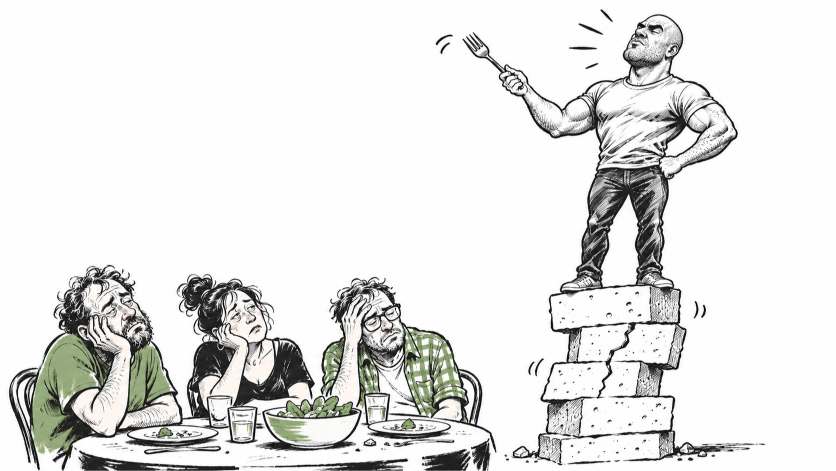
I lectured friends at dinner. I shared documentaries with missionary enthusiasm. Someone choosing to eat meat became evidence of a moral failure.
From inside that mindset, I felt informed and responsible. If something terrible was happening and I understood it, surely I had an obligation to explain?
Conveniently, that explanation also left me feeling superior.
I used the word “carnist”. There are arguments behind that term, but I used it as a shortcut. I could assign someone a category before bothering to understand them.
Once I’d done that, their disagreement was easier to dismiss. They weren’t raising a question worth considering. They were demonstrating the problem I already knew they had.
My wife experienced the version of me who was judgemental and difficult to be around. It took time to hear what she’d been telling me.
Eventually, I apologised publicly on Facebook for how I’d treated people.
The animals hadn’t asked me to become unbearable. I’d managed that contribution myself.
When does veganism start looking like a cult?
My experience doesn’t prove that the vegan movement is a cult. It does give me reason to recognise some warning signs in a community, or in my own behaviour.
Disagreement becomes evidence against the person
There is a serious ethical debate to have about killing animals for food.
But if every objection proves that the speaker is selfish, brainwashed or incapable of compassion, the debate is rigged. No answer they give can count in their favour.
I had become far too comfortable with that arrangement.
Belonging depends on proving your purity
A community can have clear principles. A vegan group discussing why vegans avoid dairy is hardly sinister.
The concern is what happens around uncertainty or a lapse. Can someone discuss their circumstances honestly? Can they question a claim without having their character put on trial?
If people have to conceal doubts to remain accepted, belonging has acquired a price.
The approved explanation always wins
Imagine a community where every positive experience confirms the diet, while every negative experience means the person did it wrong.
What could possibly count against the claim?
That question applies to a vegan influencer, a carnivore guru or anyone selling a complete explanation of how your body works. Confidence isn’t a substitute for evidence, even when the confident person agrees with you.
Outsiders become less human
I let a disagreement about food become a judgement about an entire person.
A friend could be generous, thoughtful and dependable, yet I could reduce them to what was on their plate. I’d found a moral measurement that happened to place me near the top.
Very efficient. Very flattering. Terrible for friendship.
These are prompts for examining behaviour, not a diagnostic checklist. They also don’t establish how common that behaviour is among vegans.
Animal welfare still deserves an argument
Someone can behave badly while defending a valid concern.
My sanctimony didn’t settle a single question about animal agriculture. Being obnoxious at dinner neither proves nor disproves an argument about a farm, a slaughterhouse or animal exploitation.
Equally, an ethical cause doesn’t excuse every method used to promote it.
If your vegan message relies on humiliating people, you should be able to defend that choice. Caring about suffering doesn’t grant unlimited permission to inflict misery on everyone within conversational range.
I also understand why a committed vegan would reject the idea that meat-eating is merely a personal dietary choice. If you believe another being is being harmed, the issue extends beyond individual preference.
That argument deserves an answer. “You sound like a cult” can become a convenient way to avoid giving one.
The same applies to accusations of murder. A shocking label may express moral conviction, but it doesn’t do the work of explaining the argument to someone who doesn’t share its premises.
Anti-vegans can turn opposition into an identity too
There’s another trap here: reading an ex-vegan’s account as permission to stop thinking.
A militant vegan being unpleasant doesn’t make every claim about meat consumption correct. An anti-vegan subreddit mocking vegan food doesn’t establish anything about nutrition or ethics.
I can criticise how I behaved without appointing every meat eater a philosopher.
A person can build an identity around opposing a movement just as readily as joining one. If your response to every vegan argument arrives before you’ve heard it, you’ve made yourself wonderfully predictable.
The question I now find useful is whether I’m assessing the claim or checking which team made it.
The sausage that exposed the problem
My turning point was embarrassingly ordinary.
I ate a greasy snag at a barbecue and felt relief.
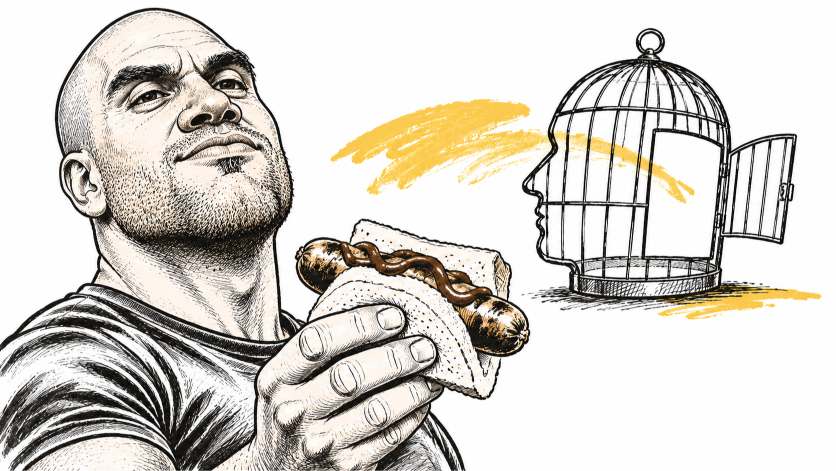
There was no grand intellectual showdown. A rule I’d treated as sacred suddenly felt like something I could choose.
That sausage didn’t resolve animal ethics. It exposed how much emotional weight I’d attached to remaining the kind of person who would refuse it.
I had to ask how much of my identity depended on being right about food. What would changing my mind mean about the lectures, the arguments and the version of myself I’d been presenting?
Once you’ve publicly appointed yourself the informed one, reconsidering gets awkward.
You might have to admit that someone you lectured had a point. Worse, you might have to let them enjoy it.
Carnivore gave me another chance to make the same mistake
Later, moving towards carnivore, I recognised familiar attractions.
Conversion stories. Trusted experts. Enemies. Confident explanations for everything.
I liked the certainty. I could feel myself wanting the new diet to prove that the people I’d previously agreed with had been wrong all along.
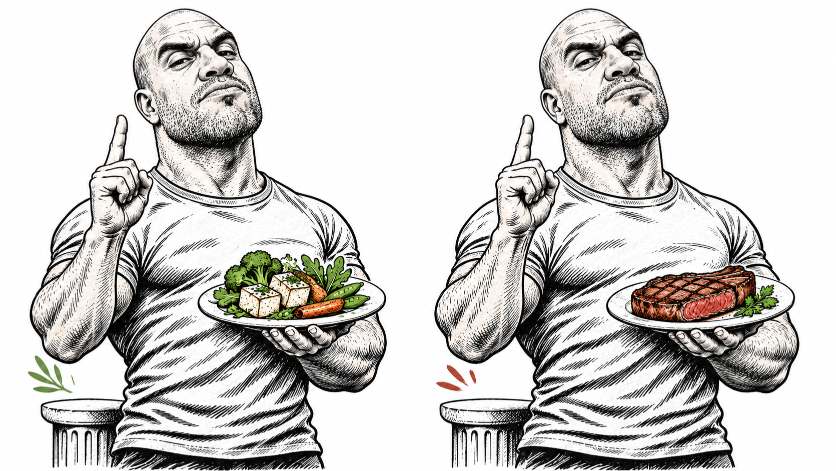
That was revealing. I was tempted to make a new set of food choices carry the same old need to be right.
Whatever I chose to eat, I still needed to assess evidence, hear objections and take responsibility for how I treated people. A change from plant-based to animal-based eating couldn’t do that work for me.
Why veganism became the starting point for my book
Those five years opened up the questions behind my book, You’re in a Cult.
Where does belonging become obedience? When does a useful idea become something we defend because our sense of ourselves depends on it? What happens when the group’s language supplies our answers before we’ve asked a decent question?
I began examining those patterns in politics, wellness, fitness, brands and workplaces. Veganism was my personal entry point.
I wrote the book because I knew how good certainty could feel, and how easily I could mistake it for thinking clearly.
So, is veganism a cult? The label is too broad for a diverse philosophy and movement. Specific groups can develop controlling dynamics, and individuals can become so invested in a moral identity that disagreement starts to feel intolerable.
I know because I’d turned dinner into a moral exam.
Writing the book meant finally examining the bloke setting the questions.